
Vietnam is a country rich in cultural heritage, with traditions deeply rooted in history, community, and family values. For foreigners visiting, living, or working in Vietnam, understanding these traditions is key to building meaningful relationships, showing respect, and fully experiencing local life.
In this comprehensive guide to Vietnamese traditions, we’ll walk you through key cultural practices, social etiquette, and what to keep in mind when interacting with locals—whether you’re at a family dinner, attending a festival, or navigating a Vietnamese workplace.
Table of Contents
Why Understanding Guide to Vietnamese Traditions Matters
In Vietnam, culture is not just celebrated on holidays—it’s woven into daily life. From how people greet one another to how they eat, address elders, or decorate their homes, Vietnamese traditions are expressions of respect, social harmony, and identity.
Foreigners who take the time to understand and adapt to local customs are often welcomed more warmly and find it easier to connect with Vietnamese people on a deeper level.
First Guide to Vietnamese Traditions: Greetings and First Impressions
What to know: Vietnamese greetings vary depending on age, gender, and familiarity. While handshakes are common in professional settings, in more traditional or rural areas, a nod or gentle bow may be more appropriate.
How to show respect:
- Greet elders or seniors first in a group.
- Use appropriate pronouns like anh, chị, cô, bác, or em based on the person’s age and relationship to you.
- In formal settings, it’s polite to use two hands when giving or receiving items like name cards or gifts.
Second Guide to Vietnamese Traditions: Family Structure and Respect for Elders
What to know: Vietnamese society is built on Confucian values, which emphasize family loyalty and respect for elders. Grandparents and parents often play a central role in household decisions, and children are expected to obey and care for them.
How to show respect:
- Use honorifics and polite language with older individuals.
- Don’t interrupt or contradict an elder during conversation.
- If invited to a family meal, wait for the oldest person to begin eating before you do.
Third Guide to Vietnamese Traditions: Important Vietnamese Traditions and Holidays
a. Tết (Lunar New Year): The most important holiday in Vietnam, Tết celebrates the arrival of spring. Families clean their homes, offer food to ancestors, and gather for big meals.
Tips for foreigners:
- Avoid visiting someone’s home uninvited during the first days of Tết.
- Don’t wear black or white (associated with funerals); opt for bright colors like red or yellow.
- Give “lì xì” (lucky money in red envelopes) to children or service staff as a cultural gesture.
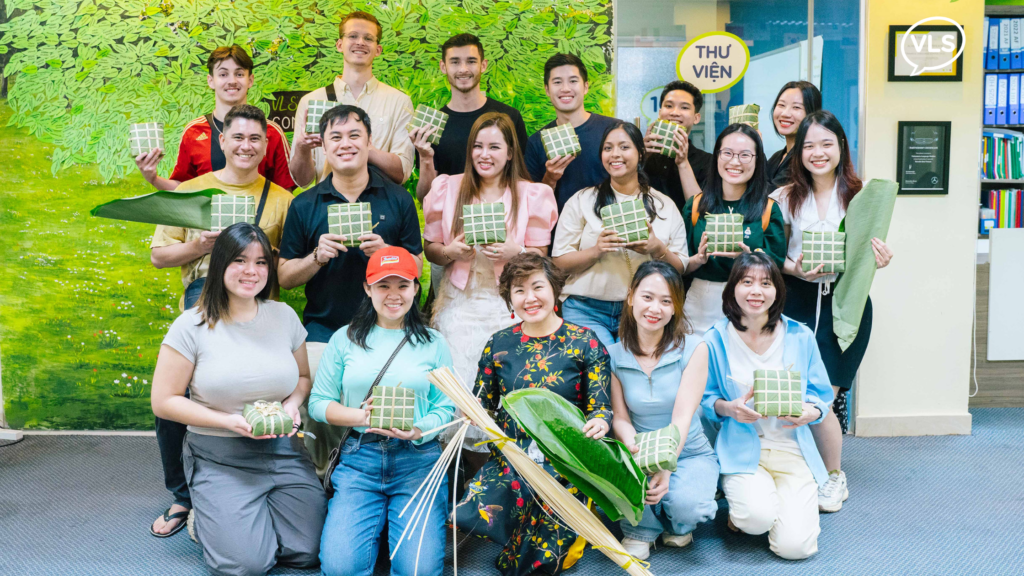
>>>>>>> You can immerse into cultural workshops at VLS: Vietnamese Traditional Sticky Rice Cake Making Workshop: Unlock the Secrets of Tết 2025
b. Hung Kings’ Commemoration Day: Celebrates Vietnam’s legendary first kings. This holiday honors ancestry and national pride.
What to do:
- Be aware of closures or public ceremonies if you’re in town.
- It’s a good time to learn about Vietnamese mythology and national identity.
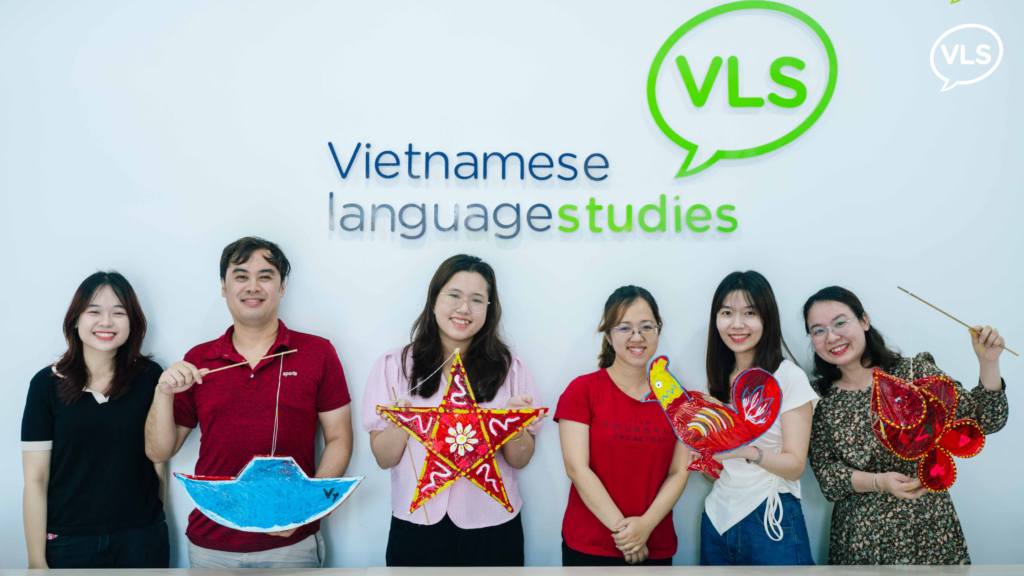
c. Mid-Autumn Festival (Tết Trung Thu): Held in the fall, this holiday focuses on children and mooncakes.
How to join in:
- Buy/ make lanterns or mooncakes to share.
- If invited to a family celebration, bring a small gift.
Fourth Guide to Vietnamese Traditions: Dining Etiquette and Food Culture
What to know: Vietnamese meals are social experiences. Dishes are shared, and everyone eats from the same plates with their own chopsticks or serving spoons.
Tips for respectful dining:
- Wait for the oldest person to lift their chopsticks before eating.
- Don’t stick chopsticks upright in a bowl of rice—it resembles incense at funerals.
- When drinking, it’s customary to say “Một, hai, ba, dzô!” (Cheers!) and make eye contact.
Fifth Guide to Vietnamese Traditions: Visiting a Vietnamese Home
What to know: Being invited into a Vietnamese home is an honor. It’s a chance to see family life and tradition up close.
How to be a respectful guest:
- Remove your shoes before entering.
- Bring a small gift (fruits, sweets, or something from your home country).
- Compliment their home—but avoid overly enthusiastic or exaggerated praise (which may be considered insincere).
Sixth Guide to Vietnamese Traditions: Gift-Giving Etiquette
What to know: Gifts are often exchanged on special occasions or as a sign of gratitude.
Tips:
- Wrap gifts nicely; red and gold are lucky colors.
- Avoid giving sharp objects (like scissors or knives) or anything black/white (funeral colors).
- When giving or receiving a gift, use both hands.
Seventh Guide to Vietnamese Traditions: Workplace Etiquette in Vietnam
What to know: Vietnamese workplaces may feel more hierarchical and formal than in many Western countries.
How to adapt:
- Address people with proper titles: Anh, Chị, Sếp, or professional terms.
- Punctuality is appreciated but flexibility is often practiced.
- Teamwork and harmony are emphasized over individualism—speak respectfully and avoid confrontation.
Eighth Guide to Vietnamese Traditions: Religion and Spiritual Practices
What to know: Vietnam is religiously diverse, with Buddhism, ancestor worship, and Confucianism being widely practiced.
How to be respectful:
- Dress modestly when visiting temples or pagodas.
- Don’t point feet toward sacred objects or altars.
- Ask before taking photos inside religious spaces.
Ninth Guide to Vietnamese Traditions: Language and Politeness
Why it matters: Using even basic Vietnamese phrases shows respect and effort. Vietnamese people deeply appreciate foreigners who try to learn the language.
Useful phrases:
- Xin chào – Hello
- Cảm ơn – Thank you
- Xin lỗi – Sorry / Excuse me
- Dạ / Vâng – Polite way to say “yes”
- Không sao đâu – It’s okay / No problem
Tip:
At VLS, we focus not only on grammar but also on contextual language use — how to speak appropriately in each cultural setting.
Common Cultural Missteps to Avoid
To help you avoid unintentional disrespect, here are a few things to be cautious of:
- Touching someone’s head (especially a child): Considered disrespectful.
- Showing anger publicly: Seen as a loss of face.
- Pointing with your finger: Use your whole hand or nod.
- Overly direct communication: Vietnamese people tend to speak diplomatically or indirectly to maintain harmony.
How VLS Helps Foreigners Embrace Vietnamese Traditions
At Vietnamese Language Studies (VLS), we believe language is inseparable from culture. That’s why we integrate cultural knowledge and communication skills into every class. Our programs go beyond textbooks, offering:
- Culture & Mentality Workshops
- Real-life role plays and scenarios
- Holiday celebrations and community events
- Custom lessons tailored for expats and professionals

Whether you’re here short-term or long-term, VLS will help you not just speak Vietnamese, but live it — respectfully, meaningfully, and confidently.
Final Thoughts: Respect Opens Doors
Respect is the foundation of every strong connection in Vietnam. When you understand the guide to Vietnamese traditions, your language journey becomes much more than learning words — it becomes an act of empathy, openness, and cultural exchange.
Let this guide to Vietnamese traditions be your starting point to becoming not just a visitor, but a participant in the rich life and values of this beautiful country.


Winvn9? Yeah, I gave it a whirl. The registration was smooth, and I liked their promotions. Could use a bit more polish visually, but the games played fine. Worth a shot, I reckon. You can find them here: winvn9
Dovi88? I’ve heard mixed things, but my experience has been pretty positive so far. The site is responsive, and I like the selection of live dealer games. Fingers crossed it stays this way! Explore dovi88 yourself!