
Table of Contents
1. Introduction: More Than Just Grammar
If you’ve ever tried to say “I” or “you” in Vietnamese, you’ve probably realized it’s not as simple as in English. Vietnamese pronouns change depending on age, relationship, gender, and social context. We often use kinship terms – words that describe relationships to refer to people.
For example:
- “Anh ăn cơm chưa?” – “Have you eaten?” (to an older male)
- “Em học tiếng Việt à?” – “Are you learning Vietnamese?” (to a younger person)
This unique system doesn’t just reflect grammar — it reflects culture. Every time you use a pronoun correctly, you’re not only speaking Vietnamese but also showing respect and understanding of social harmony.
This article is your friendly Vietnamese lesson on how Vietnamese pronouns work: how to refer to yourself, address others, and talk about someone else — without accidentally sounding too formal or too rude.
2. First-Person Vietnamese Pronouns in Vietnamese
Let’s start with first-person Vietnamese pronouns — the ones you use to talk about yourself. Unlike English, where “I” is always “I,” in Vietnamese, how you refer to yourself depends on who you’re talking to. You might call yourself “tôi”, “mình”, “em” or even “anh/chị” depending on age, gender, and your relationship with the listener.
This choice shows not just self-expression but also respect and emotional connection. It’s a fascinating part of Vietnamese culture that makes every interaction feel more personal.
Check out the tables below to see the most common Vietnamese pronouns, along with when and how to use them naturally in conversation.
| Formal | Informal | |
| First-Person Singular Vietnamese Pronouns | I, me tôi | (used when speaking to peers of the same age) mình: neutral and polite tui: casual and friendly tao: casual, potentially rude or disrespectful |
| First-Person Plural Vietnamese Pronouns | Exclusive we chúng tôi | (used when speaking to peers of the same age) chúng mình / tụi mình: neutral and polite tụi tui: casual and friendly tụi tao: casual, potentially rude or disrespectful |
| First-Person Plural Vietnamese Pronouns | Inclusive we chúng ta | (used when speaking to peers of the same age) mình / chúng mình: neutral and polite tụi mình: casual and friendly |
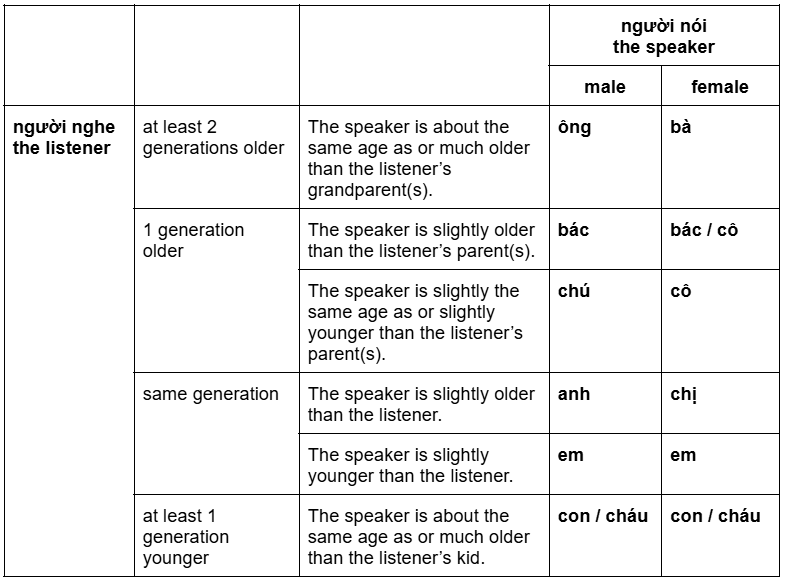
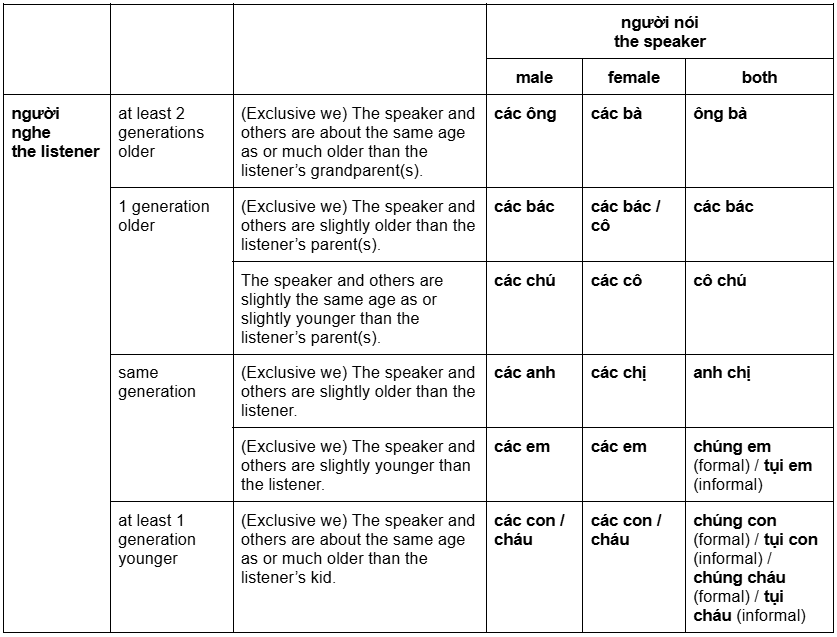
*Kinship terms below often serve as first-person pronouns.
1. Singular:
2. Plural:
3. Second-Person Pronouns in Vietnamese
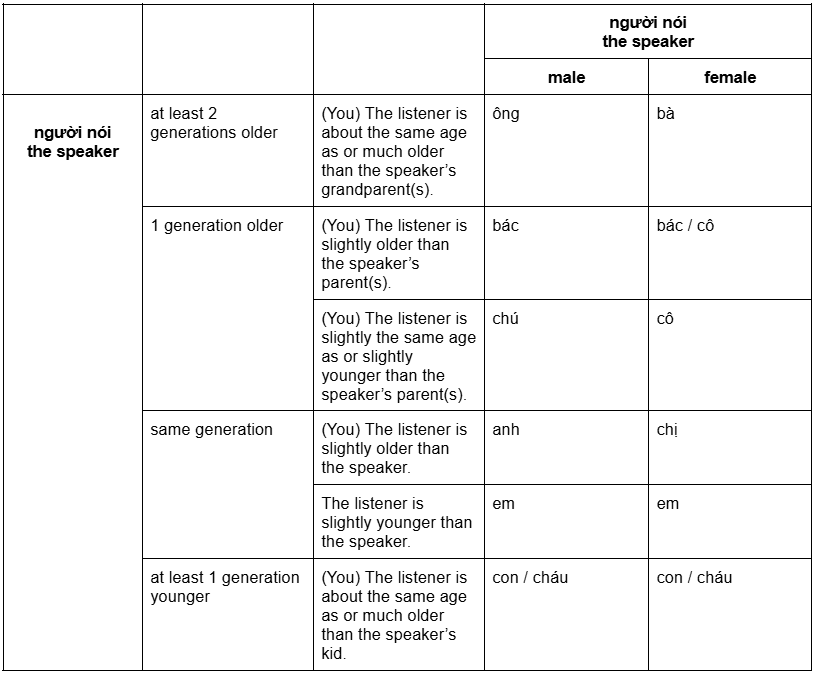
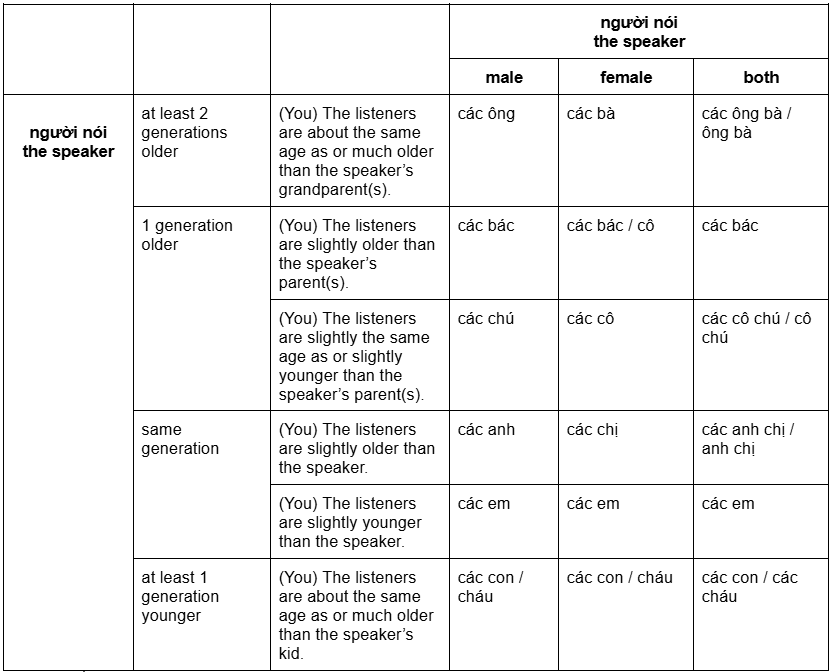
Second-person Vietnamese pronouns are where many learners realize how deep and relational this language truly is. There’s no universal “you” — instead, you’ll hear words like “bạn”, “anh”, “chị”, “cô”, “chú”, and many more, each chosen based on age, familiarity, and social hierarchy.
Mastering these pronouns helps you sound respectful, warm, and authentic — whether you’re chatting with a friend or greeting your teacher.
The tables below list the most common Vietnamese personal pronouns used for addressing others, along with notes on formality and common contexts.
1. Singular:
2. Plural:
4. Third-Person Pronouns in Vietnamese
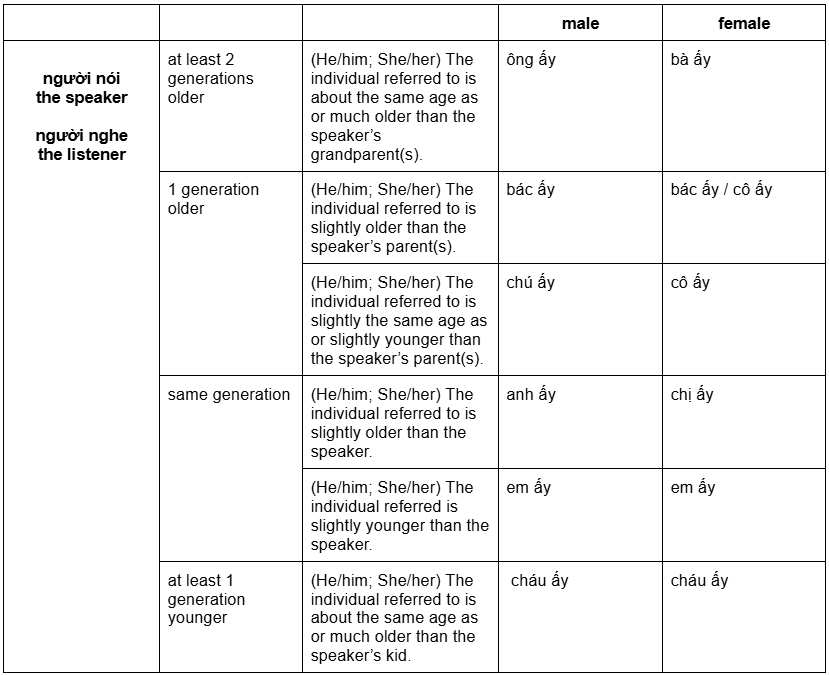
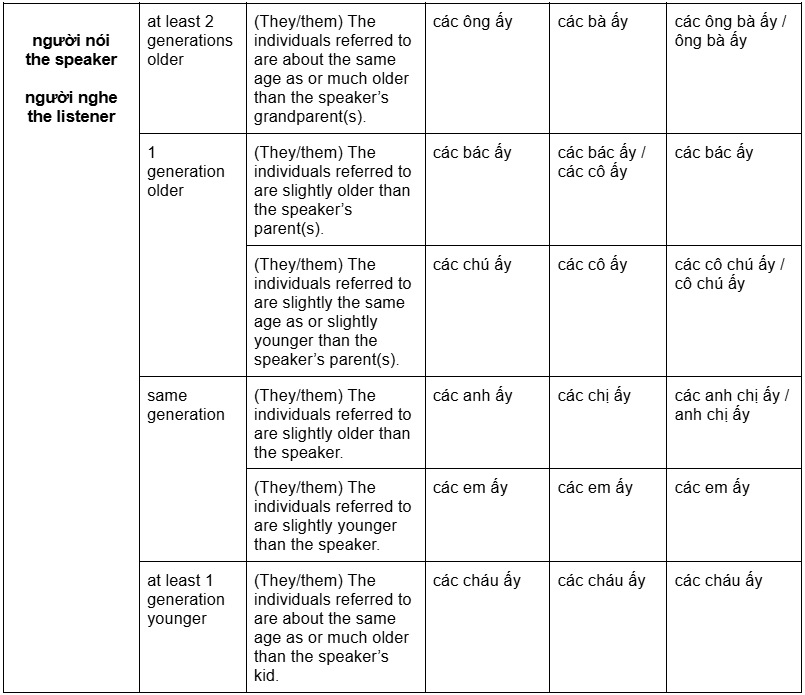
When it comes to third-person Vietnamese pronouns, you’ll notice something unique — many are actually Vietnamese kinship terms used to refer to people in an indirect but affectionate way. Instead of saying “he” or “she,” you might say “anh ấy” “chị ấy” “bác ấy” or “em ấy”.
This blending of kinship and pronouns beautifully reflects how the Vietnamese language emphasizes relationships and respect even when talking about someone.
In the tables below, you’ll find examples of the most common third-person pronouns in Vietnamese, their meanings, and the subtle nuances that come with each.
1. Singular:
2. Plural:
5. Tips to Learn and Remember Vietnamese Pronouns
Learning Vietnamese personal pronouns can feel like a puzzle at first — but once you get the hang of it, you’ll see how beautifully they mirror Vietnamese culture and relationships. Here are some effective and research-backed strategies to help you remember and use them naturally:
1. Immerse Yourself in Real Conversations
Watch Vietnamese dramas, YouTube vlogs, or street interviews. Pay attention to how people actually address one another in daily life. You’ll quickly notice how Vietnamese pronouns shift depending on age, gender, and familiarity.
Try watching shows like 2 Ngày 1 Đêm, Gia Đình Haha — they’re fun, and you’ll hear tons of authentic pronoun use in different contexts.
2. Focus on Relationships, Not Translations
This is the golden rule. Don’t treat pronouns as one-to-one English equivalents. Instead, think of them as social roles. For example, calling someone “anh” or “chị” expresses warmth and respect — even when you’re not related. This mindset shift from pure grammar to social context is the key.
When you think “Who is this person to me?” before speaking, your choice becomes much more natural.
3. Practice Role-Play in Context
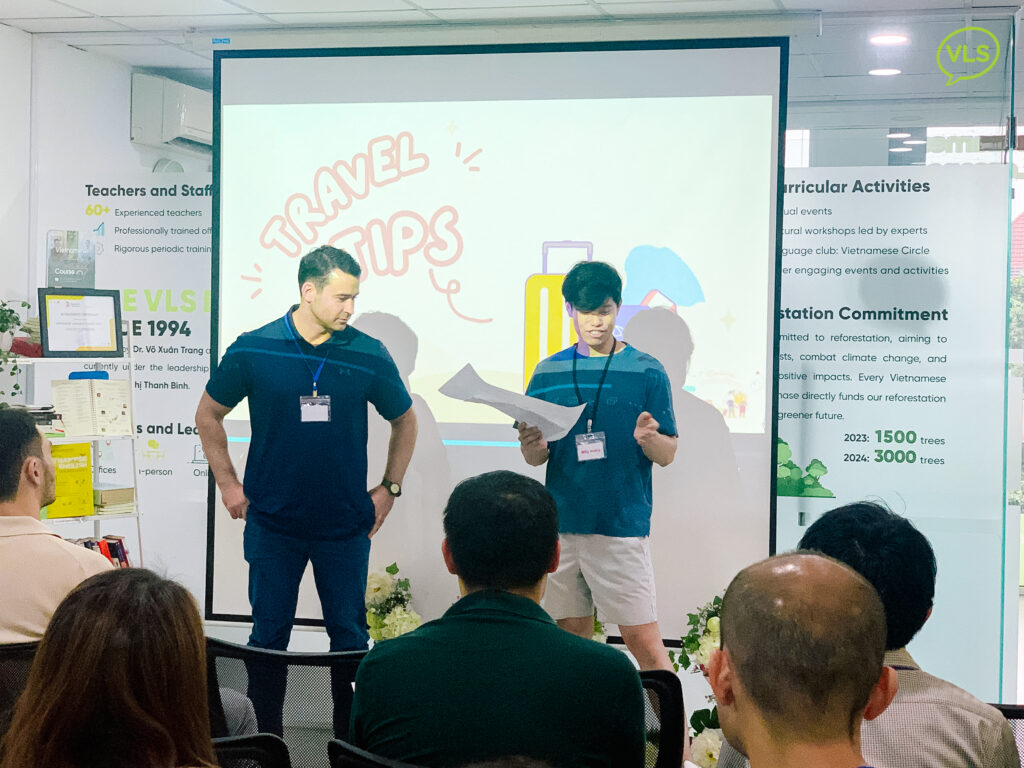
Theory is good, but practice makes perfect. Create short scenarios — a teacher-student exchange, a chat between friends, or a workplace conversation. Then try using the correct Vietnamese personal pronouns for each situation.
For instance, in a classroom, you might say to your female teacher: “Cô ơi, cho em hỏi một chút được không?” (Excuse me, Teacher, may I ask you a quick question?)
In a café, you might request a younger waiter or waitress by saying: “Em ơi, cho anh / chị một ly cà phê sữa đá.” (Excuse me, could I get an iced milk coffee?)
Role-playing helps move pronoun use from your head to your instinct — which is key to fluency.
4. Connect Pronouns with Culture
Every time you study Vietnamese pronouns, remember they’re not just grammar — they’re a window into Vietnamese society.
Understanding them is part of understanding why Vietnamese people value respect, community, and emotional connection so much.
That’s why many learners say mastering pronouns was a turning point in their Vietnamese learning journey.
6. Speak Like a Local
By now, you’ve discovered that Vietnamese pronouns are more than just words — they’re a reflection of identity, respect, and connection.
You learned that:
- First-person pronouns express who you are and how close you feel to others.
- Second-person pronouns depend on social hierarchy, age, and familiarity.
- Third-person pronouns often use Vietnamese kinship terms to keep the tone warm and personal.
Each time you speak Vietnamese, you’re not only learning a language — you’re engaging in a cultural exchange. The more authentically you use Vietnamese personal pronouns, the more locals will open up to you. So next time you take a Vietnamese lesson or chat with your friend at a café, prioritize listening. Notice how they address you, respond with the right pronoun, and you’ll instantly sound more like a local — in both language and spirit.
7. Ready to Master Vietnamese Pronouns with Confidence?
Learning Vietnamese pronouns can feel challenging at first — but you don’t have to do it alone. At Vietnamese Language Studies (VLS), we’ve helped thousands of expats, international students, and language enthusiasts not only understand the logic behind Vietnamese personal pronouns but also use them naturally in real-life conversations.
Our courses are designed to make learning fun, cultural, and interactive — from pronunciation practice to understanding Vietnamese kinship terms in daily life. Whether you’re living in Vietnam or learning from abroad, VLS offers flexible class formats that fit your lifestyle.
Start your Vietnamese lesson today and experience how speaking naturally can help you connect deeply with local people, culture, and community.
Visit www.vlstudies.com to explore our programs and take your first step toward mastering Vietnamese like a local!




Dom88com.com… I recognize the name. I think I saw an ad for them on some sports stream the other day. Can’t really say much more than that! Website looks clean, though. Worth a peek, perhaps? See for yourself: dom88com
789win88, heard about them! Seems legit, decent range of games. Gonna drop by later tonight! Explore here: 789win88
Just downloaded a new APK from qq222apk. Seems legit so far! Testing it out now… will report back if it’s a winner.
Heard some talk about p44bet. Decided to try my luck. The interface is pretty slick, so far so good!
Spinning some reels over at one21slots. They have a decent selection of games. Wish me luck!