
Vietnamese idioms are a fascinating aspect of the language, offering insights into the culture, values, and humor of the Vietnamese people. These colorful expressions often draw inspiration from everyday life, folklore, and historical events. Let’s explore some popular Vietnamese idioms and delve into their meanings and usage with VLS.
Table of Contents
Vietnamese Idioms: A Window into Vietnamese Culture
Common Vietnamese Idioms
1. “Tai vách mạch rừng” (The wall has ears, the forest has veins)
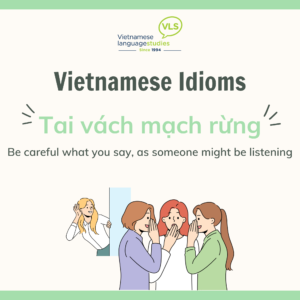
This idiom emphasizes the importance of discretion in speech. It suggests that even in the most private settings, one should be cautious about what they say, as there might be unseen listeners or observers.
- Example: “Cẩn thận lời nói, tai vách mạch rừng.” (Be careful with your words, the walls have ears.)
2. “Đi đêm lắm có ngày gặp ma” (Keep wandering at night and you’ll see a ghost eventually)

This idiom serves as a warning about the consequences of persistent wrongdoing. It implies that continued bad behavior will eventually lead to negative repercussions.
- Example: “Anh ta cứ nói dối suốt ngày, đi đêm lắm có ngày gặp ma thôi.” (He lies all the time. If he keeps doing that, he’ll get caught eventually.)
3. “Chín người mười ý” (So many men, so many minds)
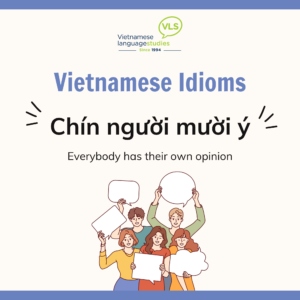
This idiom highlights the diversity of opinions and perspectives among people. It suggests that it’s common for individuals to have differing viewpoints on a particular matter.
- Example: “Trong cuộc họp, chín người mười ý, rất khó để thống nhất.” (In the meeting, everyone had a different opinion, making it hard to reach a consensus.)
4. “Mèo khen mèo dài đuôi” (The cat praises its own long tail / Every cook praises his own broth)
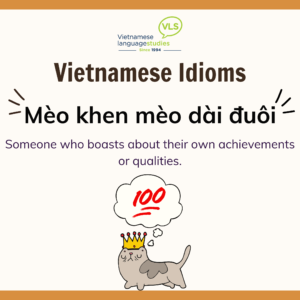
This idiom describes someone who boasts about their own achievements or qualities. It implies a sense of self-aggrandizement and a tendency to exaggerate one’s abilities.
- Example: “Anh ta luôn tự khen mình là người giỏi nhất trong nhóm, đúng là mèo khen mèo dài đuôi.” (He always praises himself as the best in the group, truly a case of every cook praises his own broth.)
Idioms Reflecting Vietnamese Values
Vietnamese idioms often reflect the cultural values and beliefs of the Vietnamese people. For example, the emphasis on family and community is evident in idioms like:
- “Một con ngựa đau cả tàu bỏ cỏ” (One sick horse spoils the whole cartload of hay) – This idiom highlights the importance of collective responsibility and the negative impact of one individual’s problems on the entire group.
- “Lá lành đùm lá rách” (Healthy leaves cover broken leaves) – This idiom emphasizes the value of helping those in need and supporting one another.
Confusing Vietnamese Idioms
Vietnamese idioms, while adding color and depth to the language, can sometimes be tricky for learners due to their nuances and potential for misinterpretation. Here are two common examples that often cause confusion:
- “Đều như vắt TRANH” vs. “Đều như vắt CHANH”
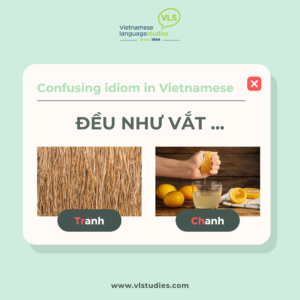
While both phrases sound similar, they carry distinct meanings.
- “Đều như vắt TRANH” is the correct idiom. It literally translates to “even like squeezing thatch,” referring to the consistent and uniform arrangement of thatch on a roof. This idiom conveys the idea of something being very regular, consistent, or uniform.
- “Đều như vắt CHANH” is a common misinterpretation. It translates to “even like squeezing a lemon,” suggesting a consistent and regular action. However, it doesn’t carry the specific meaning of “very consistent” or “uniform” in the same way that “đều như vắt tranh” does.
Example: “Anh ấy đến công ty đúng giờ đều như vắt tranh.” (He arrives at work on time consistently.)
- “Ướt như chuột LỘI” vs. “Ướt như chuột LỘT”
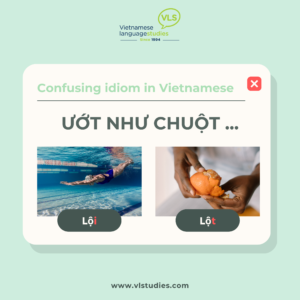
The correct idiom is “Ướt như chuột LỘI,” which means “soaked like a paddling rat.” This phrase accurately conveys the idea of being completely drenched.
- “Ướt như chuột LỘI” is the correct idiom, emphasizing the idea of being thoroughly soaked.
- “Ướt như chuột LỘT” is a common misinterpretation. While “lột” can mean “to shed” (as in shedding skin), rats do not shed their skin like snakes. The correct word in this context is “lội” (as seen in ‘bơi lội’) which means “to swim.”
Example: “Sau cơn mưa, anh ấy ướt như chuột lội.” (After the rain, he was as wet as a paddling rat.)
Remember: Learning Vietnamese idioms can be a rewarding experience, but it’s essential to pay attention to the nuances and correct usage to avoid misunderstandings. Practice and exposure to native speakers will help you master these colorful expressions and enhance your language skills.
Using Vietnamese Idioms in Everyday Conversation
Incorporating Vietnamese idioms into your conversations can add depth, color, and a touch of local flavor. However, it’s important to use them appropriately and in the right context to avoid misunderstandings.
When using an idiom, consider the following:
- Context: Ensure that the idiom is relevant to the situation and that the other person will understand its meaning.
- Tone: Be mindful of the tone of your conversation. Some idioms might be more suitable for informal settings, while others are more appropriate for formal occasions.
- Cultural Sensitivity: Be aware of any cultural nuances associated with the idiom. Avoid using idioms that might be considered offensive or inappropriate in certain situations.
By learning and using Vietnamese idioms, you can gain a deeper appreciation for the language and culture. These colorful expressions offer a glimpse into the minds and hearts of the Vietnamese people, providing a unique window into their world.
>>> Read more: 6 Vietnamese Useful Idioms & Proverbs – VLStudies



selamat datang di situs slot terbaik, https://umcced.edu.my/toto/ daftar
great articlesitus toto Terpercaya
great articletoto Terpercaya
selamat datang di situs slot terbaik, https://sih3.kepriprov.go.id/ daftar
great articlepafiagamkota.org Terpercaya