
In today’s increasingly interconnected world, the ability to understand and navigate different cultures is more important than ever. For expats, professionals, and travelers living in Vietnam, cross-cultural communication in Vietnam is not just a soft skill — it’s a bridge to deeper relationships, smoother experiences, and long-term success. And one of the most effective ways to build that bridge is by learning the local language: Vietnamese.
At Vietnamese Language Studies (VLS), we’ve seen how language learning goes far beyond vocabulary and grammar. It fosters empathy, unlocks cultural nuances, and transforms the way people engage across differences. In this blog, we’ll explore how learning Vietnamese enhances cross-cultural communication in Vietnam and how VLS helps learners become not just speakers of the language, but cultural connectors.
Table of Contents
What Is Cross-Cultural Communication in Vietnam?
Cross-cultural communication in Vietnam refers to the process of sharing ideas, values, and information between foreigners from different cultural backgrounds, with Vietnamese. It involves understanding not just the words someone says, but also the context, nonverbal cues, social expectations, and cultural references that come with them.
When you can communicate effectively across cultures, you:
- Avoid misunderstandings
- Show respect and cultural sensitivity
- Build trust and long-lasting relationships with Vietnamese
- Adapt more easily to Vietnamese environments
Why Language Is the Heart of Cultural Connection In Cross-cultural Communication in Vietnam
Language is more than a tool — it’s a window into how people think, feel, and relate to the world. In Vietnam, for example, simple choices like how you say “you” or “thank you” carry deep cultural meaning. Vietnamese uses a complex pronoun system that reflects age, gender, and social status. Without understanding this, even the most polite learner might accidentally come off as rude or distant.
By learning Vietnamese, expats and travelers gain direct access to:
- Cultural values, like respect for elders and social harmony
- Nonverbal communication, such as body language and tone of voice
- Social norms, such as how to greet, negotiate, or give feedback
How Learning Vietnamese Enhances Cross-Cultural Communication in Vietnam
Understanding Hierarchy and Politeness
Vietnamese culture places great emphasis on social hierarchy, and it’s built right into the language. Learners quickly discover that the way they address someone (chị, anh, em, cô, chú, etc.) depends on factors like age, familiarity, and setting.
By mastering these subtleties, learners show cultural awareness and respect, which in turn earns trust from locals. This is especially important in work settings or when forming community relationships.
Interpreting Context Beyond Words
Many aspects of Vietnamese communication are indirect. People often avoid saying “no” directly, or express disagreement in subtle ways. If you don’t speak the language or understand the context, you might miss important cues.
Learning Vietnamese helps you read between the lines, pick up on tone and phrasing, and respond appropriately — whether you’re navigating a business meeting, a group dinner, or daily life.
Building Trust and Breaking Barriers
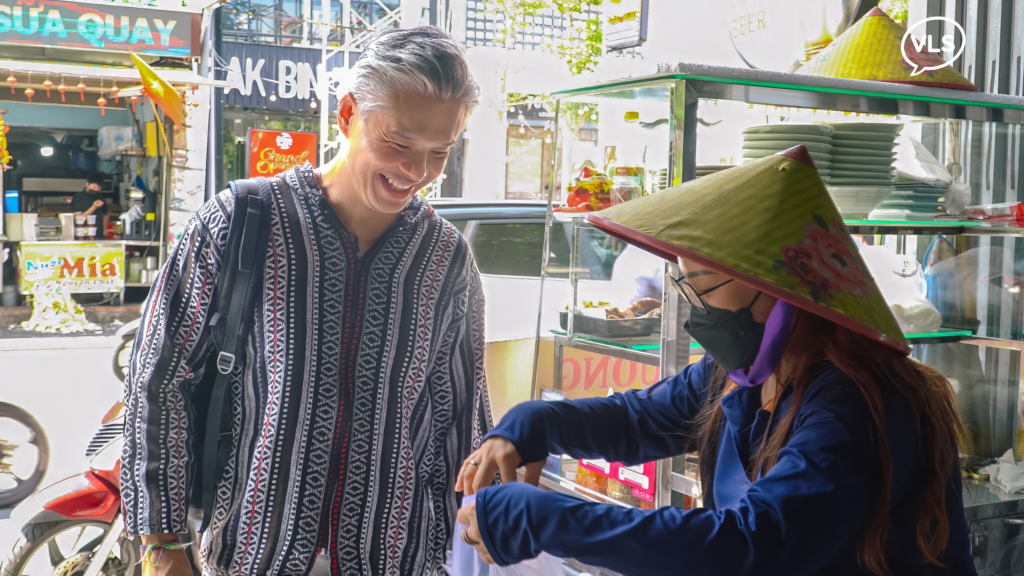
When a foreigner speaks Vietnamese — even a few simple phrases — it sends a powerful message: “I value your culture. I want to connect.”
This effort breaks down walls and opens doors. Shopkeepers smile more. Coworkers feel closer. Strangers become friends. Language shows intention, and intention builds connection.
Navigating Daily Life More Smoothly
From ordering food to asking for directions, Vietnamese helps you handle daily situations independently. But more importantly, it helps you engage meaningfully — asking someone about their hometown, commenting on the weather, or thanking them in their own language.
These small exchanges build mutual understanding and reduce the “foreigner-local” divide. They humanize both sides.
VLS Approach: Language and Culture, Hand-in-Hand
At Vietnamese Language Studies (VLS), we don’t just teach words — we teach the why behind them. Our curriculum is designed to nurture language learners who are culturally fluent, not just linguistically accurate.
Here’s how we support cross-cultural communication in Vietnam:
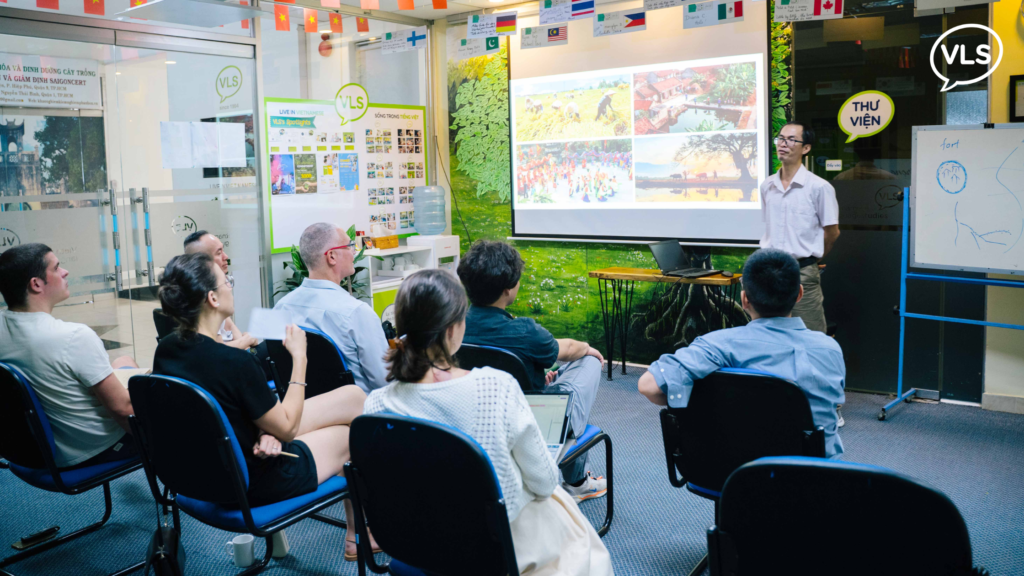
Culture-Infused Lessons: Every class at VLS includes real-life scenarios, from meeting your landlord to attending a Vietnamese wedding. We incorporate social etiquette, local beliefs, and cultural context into every unit.
Experienced Local Teachers: Our instructors don’t just correct your grammar — they share insights into how and why Vietnamese people communicate the way they do. You’ll understand the “unsaid” as well as the spoken.
Special Courses on Culture and Mentality: We offer courses like Vietnamese Culture and Mentality, designed to help learners decode social norms, understand traditional values, and communicate with confidence in both personal and professional settings.
Community Events & Language Circles: Our monthly Vietnamese Circle brings learners and locals together in a fun, friendly setting — where language is practiced through real conversation, games, and cultural exchange.
The Deeper Benefits of Cross-Cultural Communication In Vietnam Through Language Learning
Learning Vietnamese doesn’t only help you navigate conversations or understand cultural cues — it also reshapes how you think, feel, and relate to others.
Here’s how:
It Sharpens Cognitive Flexibility
When you learn a new language, your brain adapts to new grammar rules, sound patterns, and cultural logic. This improves your problem-solving skills, memory, and creative thinking — all crucial for operating in multicultural environments.
It Encourages Empathy and Perspective-Taking
Speaking Vietnamese means understanding how others see the world, including values like respect for hierarchy, community over individualism, and the importance of indirect communication.
This leads to greater emotional intelligence — the ability to empathize and adjust your tone, body language, and message based on context.
It Expands Your Global Awareness
Cross-cultural communication in Vietnam challenges you to question assumptions and appreciate the diversity of thought and behavior. You become more open-minded, more adaptable, and better equipped to work and live in international settings.
>>>>>> Read more: Boost Your Professional Success as a Corporate Expat in Vietnam with VCM Course
It Strengthens Your Sense of Belonging
Language makes you feel included — not just in conversation, but in community. When you speak Vietnamese, even at a basic level, you stop being just a foreigner and start being part of the story. Locals are more open. Friendships form more naturally. You gain confidence not only in your skills but also in your place in a new culture.
Final Thoughts: Language Is the Bridge
In a world where we’re constantly crossing borders — physically, emotionally, and professionally — language learning is one of the most powerful tools we have to build bridges instead of walls.
Learning Vietnamese gives you access to not only a beautiful and rich language, but also the hearts and minds of the people who speak it. It’s about respect, empathy, and connection — the true essence of cross-cultural communication in Vietnam.
Ready to start building your bridge?
Join a course at Vietnamese Language Studies (VLS) — where language meets culture, and learning leads to meaningful relationships.



The CTS-I certification is ideal for AV professionals seeking to prove their expertise in system installation and integration. It validates practical, hands-on skills essential for complex audiovisual projects. The CTS-I Exam Questions from DUMPSJOURNAL are crafted to reflect the real exam format, offering updated, scenario-based content that enhances understanding and performance. With these verified questions, candidates can practice effectively, identify weak areas, and build the confidence needed to pass the CTS-I certification exam on their first attempt.
Can’t remember my darn password for a777gamelogin. Anyone else dealing with this? Wish they had an easier reset process. Ugh!
Yo, what’s up with okjlactivity? Heard some buzz, checked em out. Seemed legit. Anyone else tried playing here? Let me know! okjlactivity