Table of Contents
Tết Nguyên Đán, the Vietnamese Lunar New Year, is not only the most important celebration in Vietnam; it is also the time when symbols of Tết become visible, edible, and deeply personal. During Tết in Vietnam, families do not simply decorate their homes or prepare meals for convenience or aesthetics. Every traditional dish on the table and every tree placed in the living room carries layers of meaning shaped by history, belief, and collective memory.
To truly understand Vietnamese Lunar New Year traditions, one must look beyond the festive surface and into the symbols that appear year after year. Traditional Tết foods and trees are not chosen at random. They represent wishes for prosperity, harmony, health, continuity, and moral balance. These symbols help Vietnamese families express hopes that words alone often cannot.
This article explores the most important traditional Tết foods and trees in Vietnam, and more importantly, what they symbolize—not only culturally, but emotionally.
1. Bánh Chưng and Bánh Tét: The Symbol of Earth, Unity, and Gratitude
No symbol of Vietnamese Lunar New Year is more universally recognized than bánh chưng in the north and bánh tét in the south. These sticky rice cakes are central to Tết in Vietnam not because of their flavor alone, but because of what they represent.
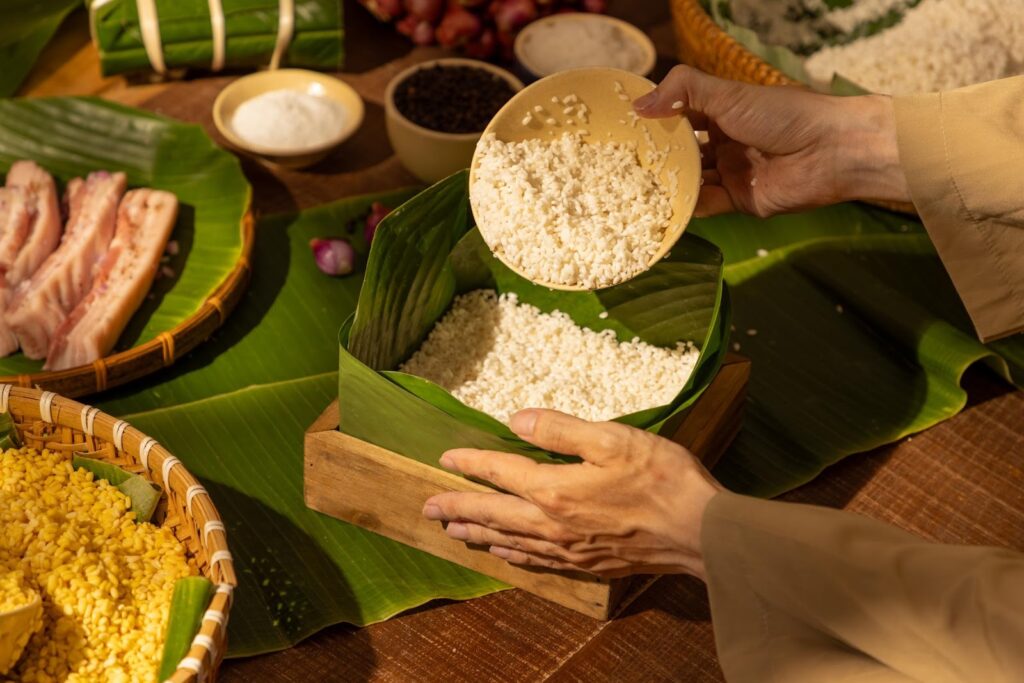
Bánh chưng is square, traditionally said to symbolize the earth, while bánh tét is cylindrical, often associated with continuity and the flow of time. Both are made from sticky rice, mung beans, and pork—ingredients that reflect Vietnam’s agricultural foundation.
The process of making these cakes is as symbolic as the cakes themselves. Families gather to wrap them, then stay awake through the night while they boil. This shared labor reinforces unity, patience, and intergenerational connection.
Symbolically, these cakes express gratitude to the earth for sustenance and respect for ancestors who passed down these traditions (background on Vietnamese ancestor worship: https://www.britannica.com/topic/ancestor-worship). Eating them during Tết is a reminder that abundance comes from harmony between people and nature.
2. Thịt Kho and Traditional Braised Dishes
Across Vietnam, especially in the south, thịt kho appears on nearly every Tết table. In the north, similar slow-cooked braised dishes fulfill the same symbolic role.
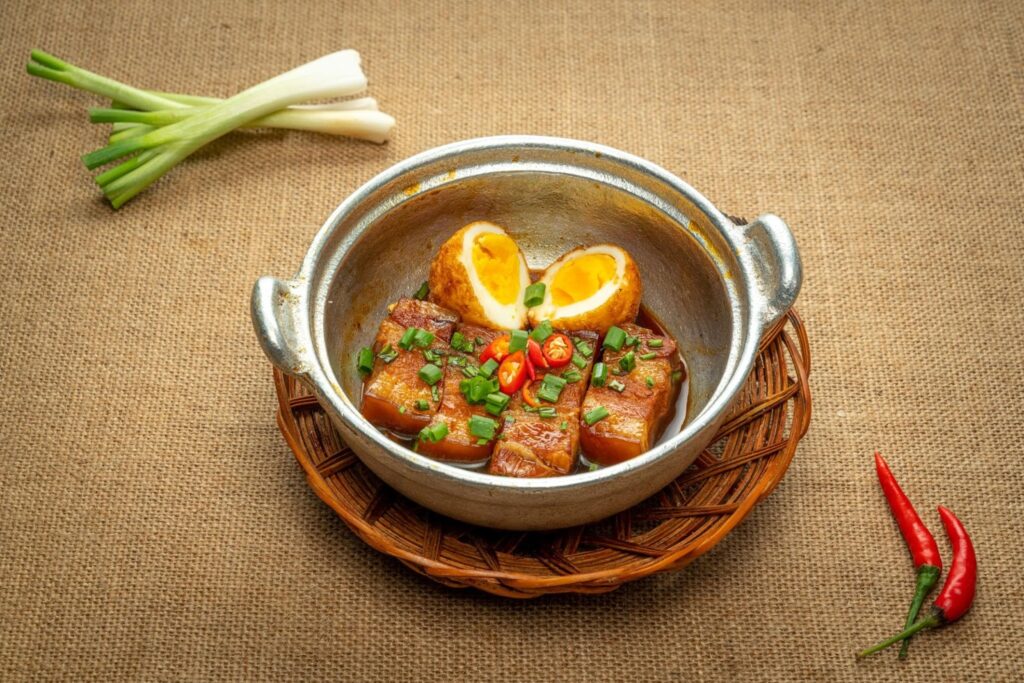
These dishes are cooked in large quantities and meant to last several days. They symbolize preparedness and abundance, ensuring the family begins the year without lack.
Slow cooking itself reflects patience and care. The long-simmering process mirrors the belief that meaningful results require time and attention. Interestingly, these dishes often taste better the next day—symbolizing growth and improvement over time.
3. Pickled Vegetables
Pickled vegetables such as dưa hành and dưa món are essential companions to rich Tết dishes.
Vietnamese cuisine values balance, both in flavor and in life. During Vietnamese Lunar New Year celebrations, meals are indulgent and heavy, so pickled vegetables provide necessary contrast.
Symbolically, they represent moderation and equilibrium. Prosperity without balance leads to excess; excess leads to instability. Including pickled foods quietly reinforces the importance of harmony in the year ahead.
4. Mứt Tết
Mứt Tết, or candied fruits and seeds, are served to guests throughout Tết in Vietnam.
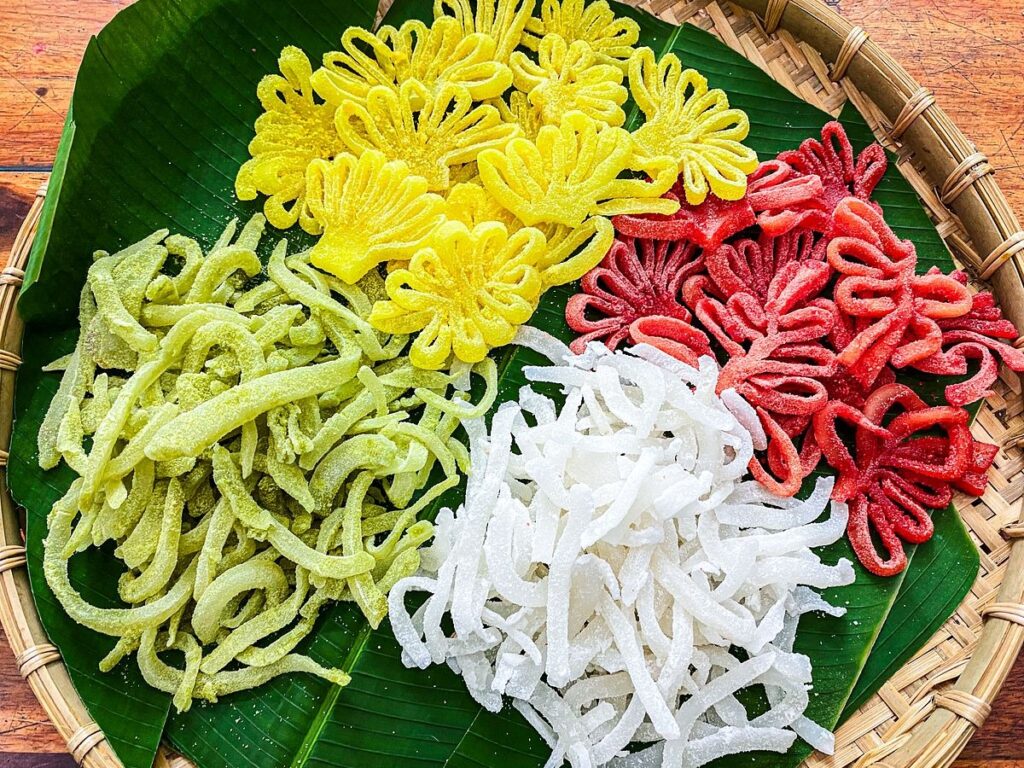
These sweets symbolize sweetness in speech and relationships. During Vietnamese Lunar New Year, people consciously avoid conflict and emphasize harmony. Offering sweet treats reinforces this intention.
The colorful variety of mứt also symbolizes completeness—many flavors coexisting in balance, much like family dynamics.
5. Five-Fruit Tray
Fruit plays a central role in Tết symbolism, especially in the form of the mâm ngũ quả, or five-fruit tray, placed on ancestral altars during the Vietnamese Lunar New Year. The number five traditionally represents balance and harmony, and each fruit is carefully chosen for its meaning, sound, or regional significance. The tray is not merely decorative—it expresses the family’s wishes for prosperity, stability, and fulfillment in the coming year.
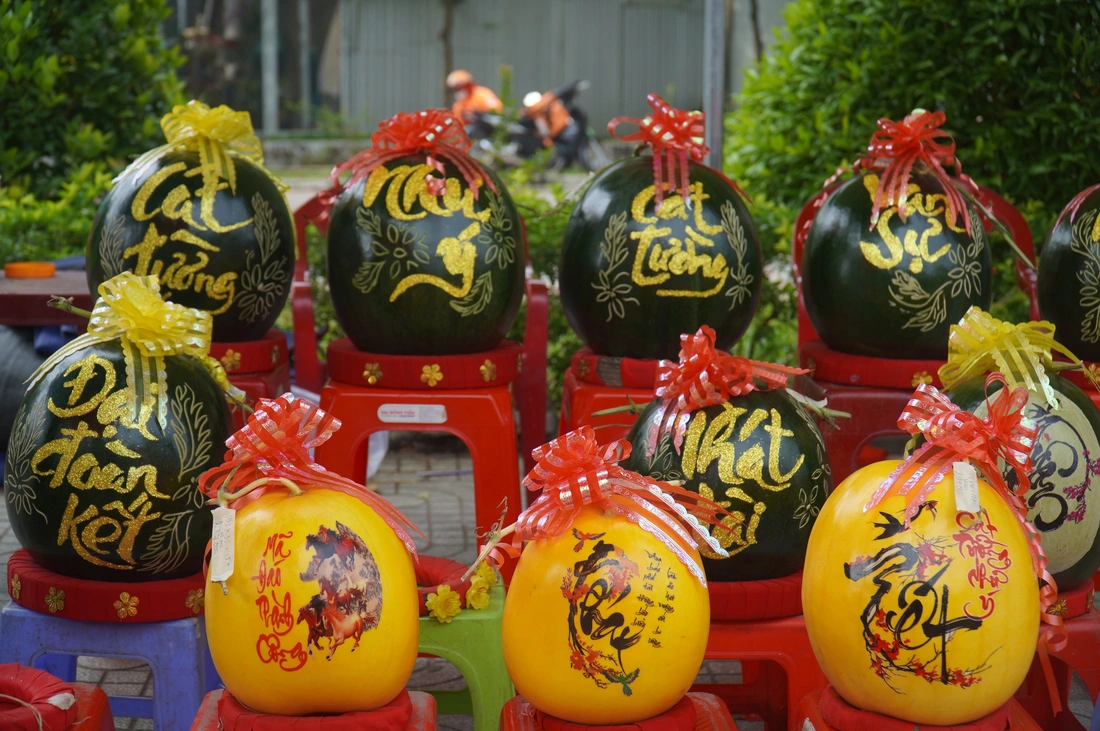
Watermelon is especially important in southern Vietnam. Its red flesh symbolizes luck, happiness, and vitality, while its round shape suggests fullness and completeness. Families often choose watermelons with care, hoping for a bright red interior as an auspicious sign of good fortune. In the north, bananas are commonly included, arranged in a way that appears to cradle the other fruits, symbolizing protection and support.
More broadly, fruits represent growth, fertility, and reward—the natural result of patience and effort. Displaying fruit during Tết in Vietnam expresses gratitude for past harvests and hope for continued abundance. The five-fruit tray becomes both offering and aspiration, reflecting a quiet belief that harmony with nature leads to prosperity in life.
6. Peach Blossom Trees (Hoa Đào)
In northern Vietnam, the peach blossom tree defines the visual landscape of Tết in Vietnam.
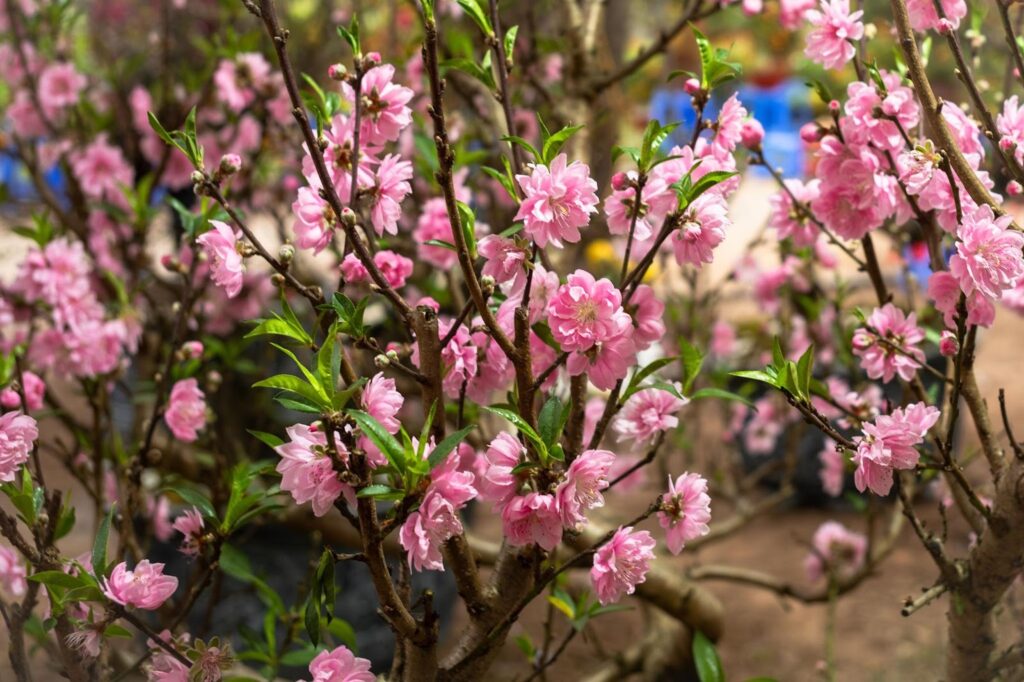
Its soft pink blooms coincide with the arrival of the new year, symbolizing renewal and vitality. Traditionally, peach blossoms were also believed to ward off negative energy.
Placing a peach blossom tree in the home signals readiness to welcome the Vietnamese Lunar New Year with openness and optimism.
7. Apricot Blossom Trees (Hoa Mai)
In southern Vietnam, hoa mai replaces peach blossoms.
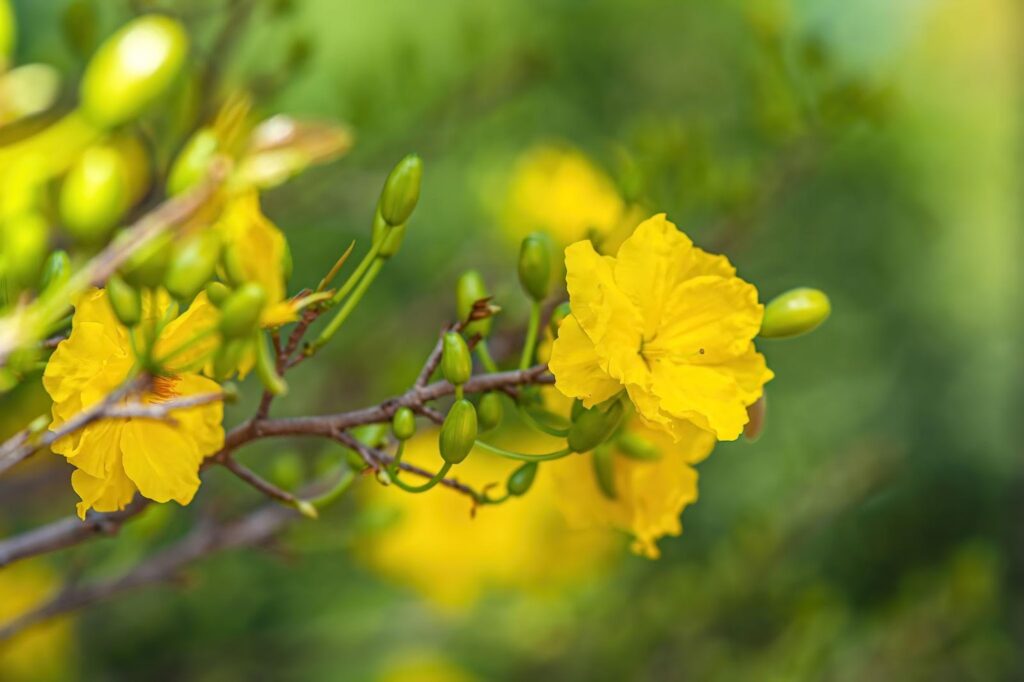
The bright yellow petals are associated with wealth and financial success. The tree’s resilience, blooming despite environmental challenges, symbolizes endurance.
Displaying hoa mai during Tết expresses hope for business growth and long-term stability—values deeply embedded in Vietnamese Lunar New Year aspirations.
8. Kumquat Trees (Cây quất/ tắc)
Kumquat trees are popular throughout Vietnam during Tết.
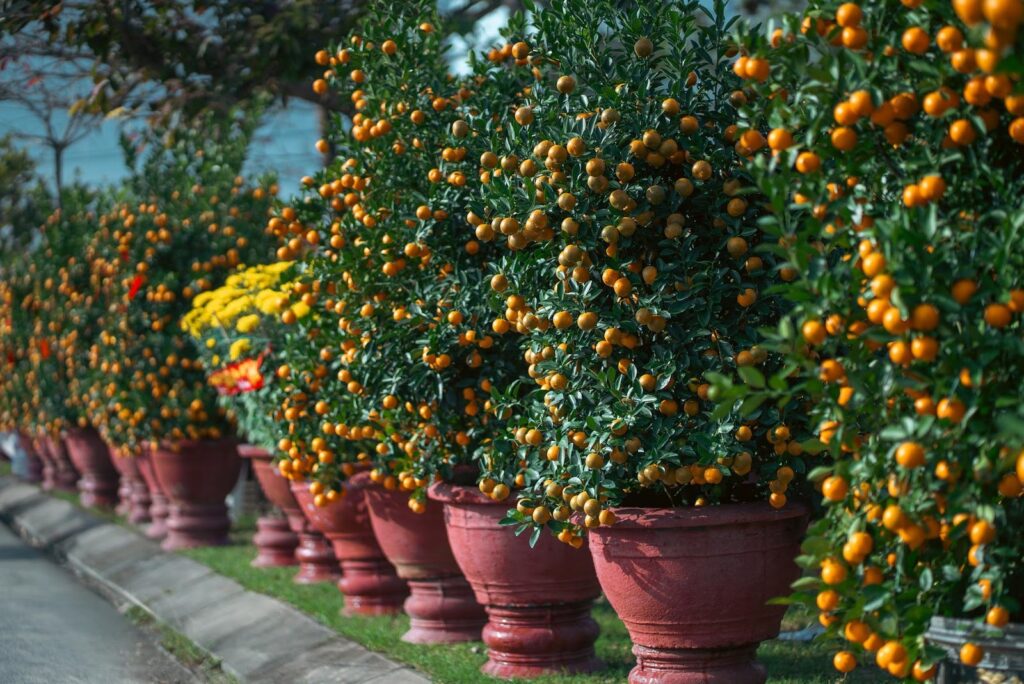
A healthy kumquat tree displays fruit, blossoms, and buds at the same time. This symbolizes continuity: past achievements, present stability, and future potential existing simultaneously.
Decorating kumquat trees with red ornaments reinforces wishes for prosperity and generational continuity.
9. Cây Nêu: The Vertical Axis Between Earth and Sky
Before the first day of Tết, in many rural areas of Vietnam, families traditionally erected a cây nêu—a tall bamboo pole placed in front of the house. Though less common today in urban settings, the image of the cây nêu remains deeply rooted in Vietnamese Lunar New Year symbolism.
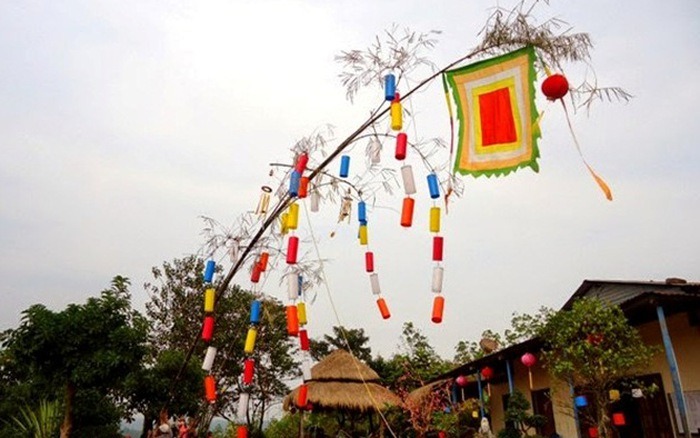
Historically, the cây nêu was decorated with small objects such as bells, leaves, charms, or symbolic ornaments. Its purpose was protective. The height of the bamboo pole signaled sacred space, marking the home as spiritually guarded during Tết in Vietnam. According to folk belief, it warned negative spirits to stay away while ancestors were welcomed back into the household.
Raising the cây nêu before the Vietnamese Lunar New Year was a way of preparing not just the physical home, but the spiritual environment. It declared that the household was ready to enter the new year consciously, respectfully, and under protection.
Even though many modern families no longer erect a physical cây nêu, the symbolism persists in collective memory. It reminds Vietnamese people that Tết is not only about celebration, but about safeguarding harmony as a new cycle begins.
10. Red Couplets (Câu Đối Đỏ): Words as Wishes and Moral Intention
Among the most visible symbols of the Vietnamese Lunar New Year are câu đối đỏ—red couplets displayed at entrances, on walls, or beside ancestral altars.
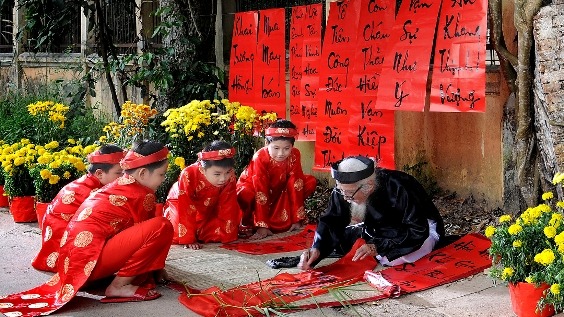
Written traditionally in Hán-Nôm characters and today often in modern Vietnamese script, these paired lines express wishes for prosperity, virtue, education, longevity, or harmony. But câu đối are more than decorative blessings.
They reflect a deeper Vietnamese belief that language carries power. Words are not neutral; they shape intention. Displaying câu đối during Tết in Vietnam is a public declaration of values the family hopes to embody in the coming year—diligence, filial piety, integrity, success.
The red background symbolizes vitality and protection, while the symmetrical structure of the parallel lines reflects balance and order. In this way, câu đối function as both aspiration and reminder: a visible commitment to live according to meaningful principles during the new year.
11. Firecrackers and the Sound of Renewal
Historically, no Vietnamese Lunar New Year was complete without the sound of firecrackers set off at midnight to mark the arrival of Tết. The explosive sound was believed to drive away negative spirits and misfortune, clearing space for good luck to enter.
Today, when fireworks replace traditional firecrackers in public celebrations, the symbolism remains intact. The sound and light still mark renewal, energy, and the collective acknowledgment that time has turned.
The absence of tràng pháo in daily life has not erased its meaning. Instead, it has transformed into nostalgia—reminding older generations of a more communal past, when neighborhoods gathered together at the threshold of a new year.
Why These Symbols of Tết Still Matter Today
Modern Vietnam has changed rapidly. Many families live in apartments and buy ready-made Tết food. Yet traditional Tết foods and trees remain visible.
Their persistence shows that these symbols are not preserved out of obligation, but out of emotional necessity. They offer a shared vocabulary for expressing gratitude, balance, unity, and hope.
Even a store-bought bánh chưng or a small potted hoa mai still carries symbolic weight. The meaning adapts, but it does not disappear.
Symbols of Tết as a Mirror of Vietnamese Values
Traditional Tết foods and trees are not decorative details. They are reflections of how Vietnamese people understand life itself.
They express a belief that prosperity must be balanced, that success is rooted in family, and that the future is shaped by how we honor the past.
For those who wish to understand Vietnamese Lunar New Year beyond its visual beauty, language and cultural nuance matter. At Vietnamese Language Studies (VLS), learning Vietnamese includes exploring the meaning behind traditions like Tết—because understanding these symbols is often the first step toward understanding Vietnam itself.
Through these foods and trees, Tết becomes more than a holiday—it becomes a living philosophy.

Downloaded the bk66gameapk the other day. Installation was smooth and game seems ok. If you need apk file, you can try here: bk66gameapk
Trying my hand at bet522bet today. The odds seem pretty good, and the site loads fast. Hopefully, I’ll walk away a winner. Check it out if you want bet522bet.
Just signed up for btbetvip. The VIP bonuses look tempting – hoping they live up to the hype! Time to roll the dice. Join the VIP party here btbetvip.