Table of Contents
If you’re in Vietnam during Tết season, you’re experiencing the country at its most meaningful time of year. Tết Nguyên Đán, the Vietnamese Lunar New Year, is not just a holiday — it is a cultural reset, a nationwide homecoming, and a celebration filled with rituals, food, symbolism, and family traditions.
For foreigners, expats, and travelers, Tết season can feel both magical and confusing. Cities become quieter, families gather, and traditions take center stage. But if you know what to look for — and what to try — Tết can become one of your most memorable experiences in Vietnam.
Here is your complete guide to the things you need to try if you’re in Vietnam this Tết season.
Visit a Tết Flower Market

One of the most iconic things to try during Tết season in Vietnam is visiting a flower market. In the weeks leading up to Lunar New Year, cities transform into colorful landscapes filled with blossoms and decorative plants.
In northern Vietnam, peach blossoms (hoa đào) dominate the scene with their soft pink petals. In the south, yellow apricot blossoms (hoa mai) symbolize prosperity and good fortune. Kumquat trees, heavy with bright orange fruit, represent abundance.
Even if you do not plan to buy anything, simply walking through a Tết flower market allows you to witness the excitement of preparation. Families carefully choose the “perfect” tree to bring luck into their homes. Vendors decorate stalls with red banners and lucky ornaments.
If you want to feel the energy of Tết before it officially begins, this is the place to start.
Try Traditional Tết Foods

Tết season in Vietnam is incomplete without its traditional foods. Many dishes are symbolic and prepared only once a year.
In the north, you should try bánh chưng, a square sticky rice cake filled with mung beans and pork, wrapped in green leaves. In the south, the cylindrical bánh tét is more common. Both represent gratitude to the earth and ancestors.
Other classic Tết dishes include braised pork with eggs (thịt kho trứng), boiled chicken, Vietnamese sausage (giò lụa), and pickled vegetables (dưa món) that balance the richness of the meal.
If you are invited to a Vietnamese home during Tết season, you will likely experience a full feast prepared for both family members and ancestors. Accept the food graciously — sharing meals is one of the most important parts of Tết culture.
Receive (or Give) Lucky Money – Lì Xì
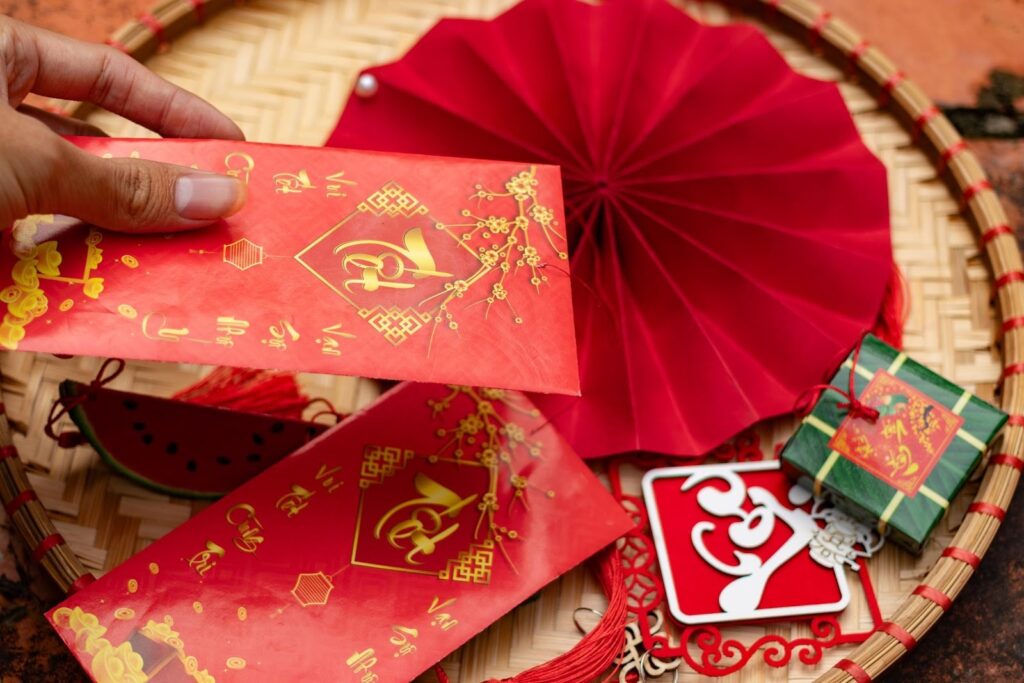
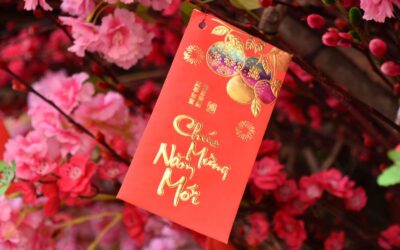
One of the most exciting traditions to try during Tết in Vietnam is the red envelope custom known as lì xì.
Children eagerly greet adults with New Year wishes, hoping to receive red envelopes containing crisp new bills. The money symbolizes good luck and blessings for the year ahead.
If you are close to a Vietnamese family, you may be invited to participate. When giving lì xì, use new banknotes if possible and present the envelope with both hands while offering a simple greeting such as “Chúc mừng năm mới.”
The amount inside is less important than the gesture. It is about sharing luck, not showing wealth.
Learn and Say Vietnamese New Year Greetings
Trying to speak Vietnamese during Tết, even if only a few words, creates an immediate connection.
Popular phrases include:
Chúc mừng năm mới – Happy New Year
An khang thịnh vượng – Wishing you security and prosperity
Vạn sự như ý – May everything go as you wish
During Tết season in Vietnam, language carries symbolic weight. People avoid negative words and focus on positivity.
If you are a foreigner living here, practicing these greetings shows cultural respect and often brings warm smiles in return.
Experience the First Day Visits
The first few days of Tết season are dedicated to visiting family members, teachers, and close friends. These visits are not casual drop-ins, but meaningful traditions that reflect respect, gratitude, and long-standing relationships. If you are invited to someone’s home during this time, consider it a genuine honor — it means you are being welcomed into an important moment of their year.
It is customary to bring a small gift such as fruit, tea, sweets, or a decorative Tết gift basket. The gesture matters more than the value. Dress neatly and respectfully, choosing bright or neutral colors if possible, and avoid wearing all-black outfits, which are traditionally associated with mourning. A polished appearance signals that you take the visit seriously and appreciate the occasion.
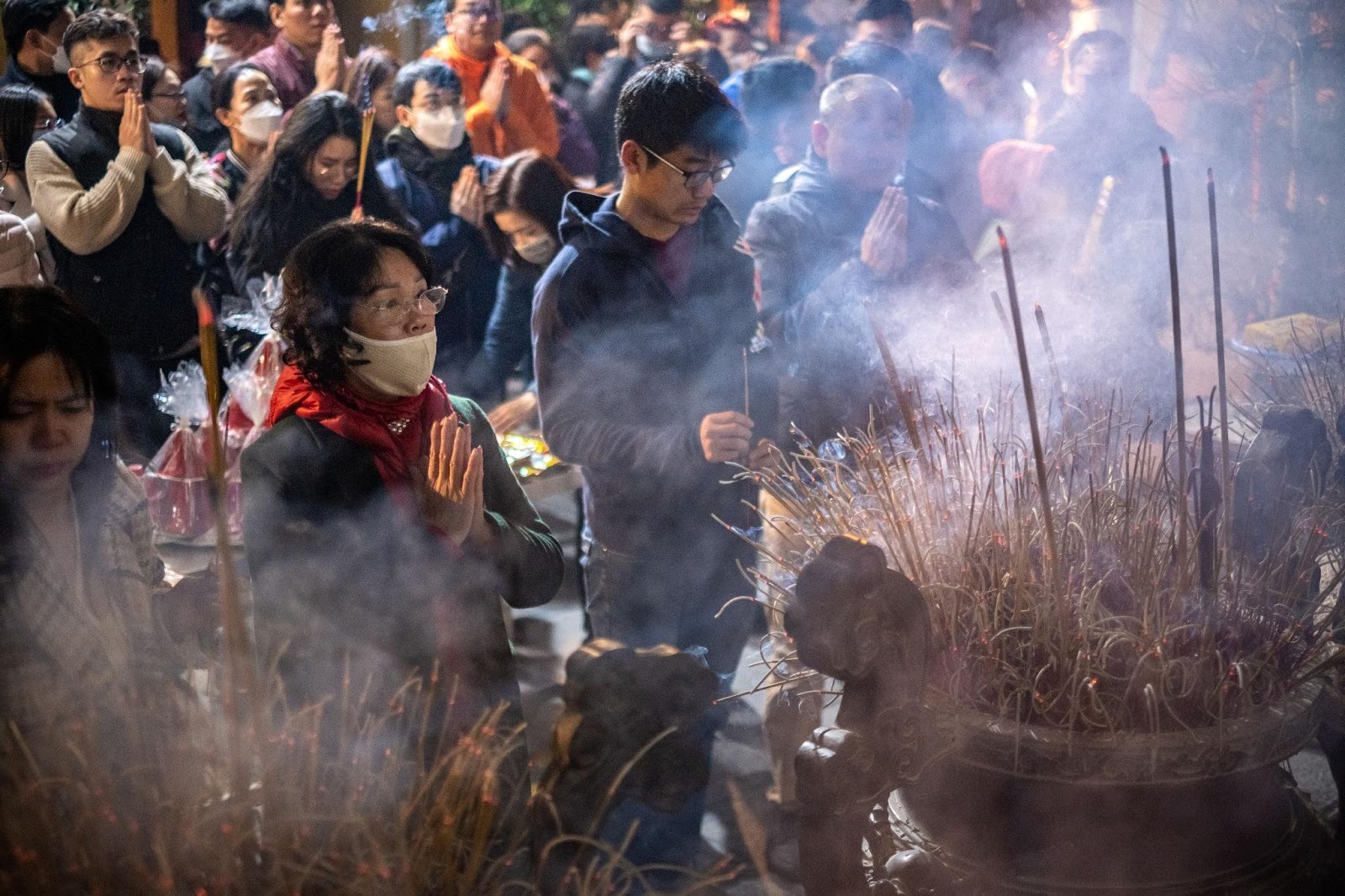
During your visit, you may see incense being offered at the family altar before guests sit down to talk or share tea. Family members might briefly pray, bow their heads, or light incense sticks in remembrance of their ancestors. Observe quietly and respectfully, and follow your host’s guidance if you are invited to participate. Even standing attentively is a sign of respect.
Trying this experience gives you valuable insight into how deeply family values, respect for elders, and ancestral connections shape Vietnamese society. It reveals that Tết is not only about celebration, but also about honoring relationships — both past and present.
Watch Fireworks on New Year’s Eve
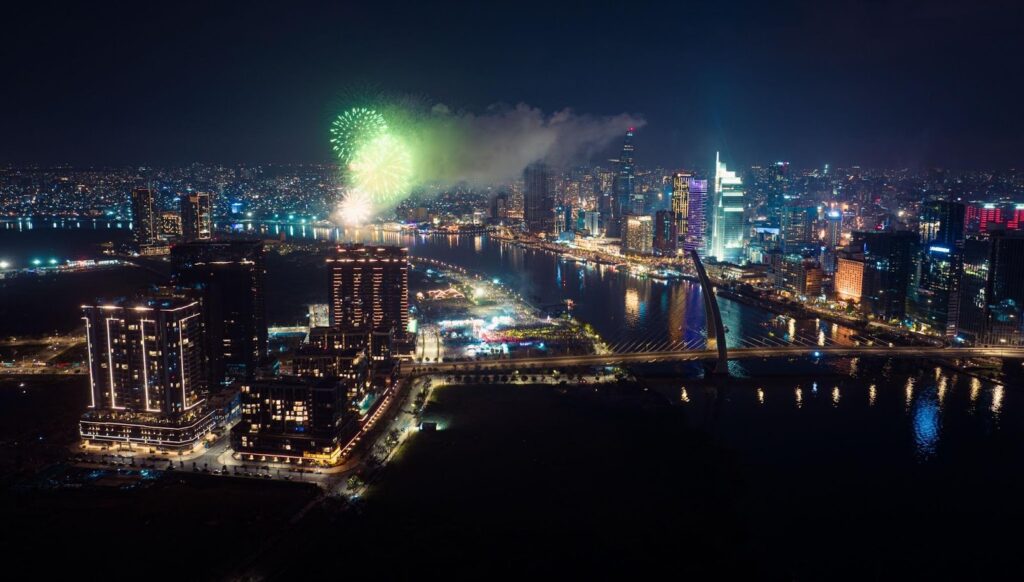
If your city hosts public fireworks displays, watching them is one of the most festive things to do during Tết season in Vietnam.
While Tết is family-oriented, New Year’s Eve still carries a celebratory atmosphere. Major cities often host countdown events and fireworks to welcome the lunar new year.
The energy feels different from Western New Year celebrations. It is joyful but also reflective, as families gather together to mark a symbolic new beginning.
Visit a Pagoda or Temple
Many Vietnamese people visit pagodas during Tết to pray for health, happiness, and success.

If you decide to visit a temple during Tết season, dress modestly and observe local customs. You will see people lighting incense, arranging offerings of fruit and flowers, and standing quietly in prayer as they reflect on the year ahead. Some may gently bow before the altar, while others pause in silence, holding incense sticks between their hands.
The atmosphere inside a temple during Tết feels noticeably different from the lively streets outside. There is a sense of calm focus — not rushed, not loud, but intentional. Families often come together, parents guiding children through small rituals, teaching them how to show respect and express gratitude.
Even as a visitor, you can feel the peaceful and meaningful energy of the space. The scent of incense in the air, the soft murmurs of prayer, and the warm glow of candles create a reflective mood. It becomes clear that Tết is not only about celebration, food, and festivities, but also about setting intentions, expressing hopes for health and prosperity, and beginning the new year with clarity and renewal.
Explore a Surprisingly Quiet City
One unique thing to try during Tết in Vietnam is simply walking through the city on the first day of the new year. It may sound ordinary, but it offers a rare perspective you will not experience at any other time.
In places like Ho Chi Minh City, streets that are normally packed with motorbikes and constant traffic become almost empty. Many residents return to their hometowns to reunite with family, leaving behind a calm and unusually quiet urban landscape. Major roads feel wider, intersections are no longer chaotic, and the usual soundtrack of honking horns fades into the background.
For photographers and explorers, this is a fascinating moment. The stillness contrasts sharply with Vietnam’s usual vibrant pace, revealing a softer, more reflective side of the city. It feels like a collective pause — a brief reset before everyday life gradually returns to its energetic rhythm.
Try Tết Snacks and Candied Fruits

Every Vietnamese home prepares a snack tray filled with candied fruits and seeds for guests. Known as “mứt,” these sweet treats include candied coconut, ginger, lotus seeds, and kumquat.
When visiting someone’s home, you will likely be offered tea and invited to try these snacks. Sampling them is a simple but authentic Tết experience.
Each flavor reflects balance — sweet, spicy, and slightly bitter — symbolizing the complexity of life.
Understand the Emotional Side of Tết
Beyond food, decorations, and rituals, one of the most important things to try during Tết season in Vietnam is simply understanding its emotional depth.
Tết is about reunion. Many Vietnamese people travel long distances to spend just a few days with their families. It is about honoring ancestors, expressing gratitude, and starting fresh.
If you are far from your own family during Tết, you may feel a mix of curiosity and homesickness. That is normal. Allow yourself to observe, participate, and reflect.
When you approach Tết with openness rather than expectation, it becomes more than a cultural event — it becomes a shared human experience of renewal.
Final Thoughts
If you are in Vietnam during Tết season, do not treat it as just another holiday. It is the most meaningful time of the year.
From visiting flower markets and tasting bánh chưng to giving lucky money and learning Vietnamese greetings, countless meaningful experiences await you. Each small interaction — whether it is saying “Chúc mừng năm mới” correctly or understanding why families prepare ancestral offerings — brings you closer to the heart of Vietnamese culture.
Trying these traditions will help you move beyond surface-level tourism and truly understand Vietnam.
And if you want to experience Tết not just as a visitor, but as someone who genuinely understands the language and cultural context behind it, learning Vietnamese makes all the difference. At Vietnamese Language Studies (VLS), we support foreigners through personalized Vietnamese language and culture courses designed to help you connect confidently with local communities — during Tết and beyond.
Tết is about connection — to family, to history, and to hope for the future. And if you are here during this special season, you are already part of the story.