Table of Contents
When you start learning the Vietnamese language, you quickly realize it’s not just about tones, grammar, or pronunciation. Beneath every word lies a reflection of Vietnam’s values, hierarchies, and emotions – a web of hidden cultural codes that reveal how Vietnamese people see the world and connect with each other.
Vietnamese is a language that doesn’t just communicate meaning; it embodies a culture. To truly understand it, you must go beyond vocabulary lists and grammar charts – you must step into the Vietnamese mindset.
Language as a Mirror of Vietnamese Culture
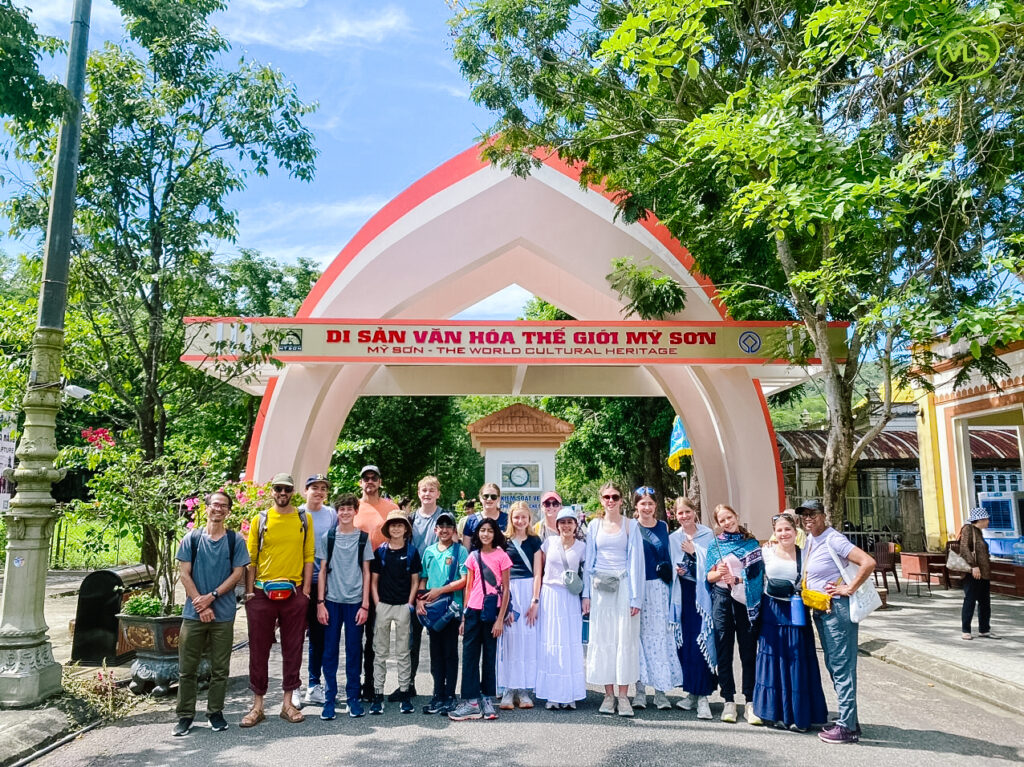
Linguists often say that a language is a mirror of its people and in the Vietnamese language, that mirror shines vividly, reflecting centuries of philosophy, social values, and collective identity. Every sentence carries more than information; it carries a way of being. Vietnam’s long history of Dualism, Confucianism, Buddhism, and communal living has profoundly influenced how people think and speak. Words are not used simply to convey messages – they maintain social harmony, express empathy, and show one’s place within the community.
You can hear this in the smallest interactions. When a Vietnamese person greets someone, they rarely say a neutral “Hello.” Instead, they might say “Em ăn cơm chưa?” (“Have you eaten yet?”) – a phrase that sounds mundane but actually expresses care, familiarity, and social warmth. Even a question about food becomes a gesture of connection.
Similarly, age and hierarchy are deeply embedded in communication. The language forces you to notice and respect them every time you speak. You cannot talk to someone without identifying your relationship first – are they older (anh/chị), younger (em), or perhaps a teacher (thầy/cô)? Vietnamese doesn’t allow you to be linguistically detached; it constantly reminds you of where you stand in relation to others.
This relational way of speaking reflects a collectivist worldview, where one’s identity is always connected to family and society. While English centers on the “I,” Vietnamese places more weight on the “we.” The pronouns, phrases, and even conversational habits reinforce the idea that every individual belongs to a larger network of care and obligation.
Even humor and disagreement follow cultural rules. A Vietnamese person might soften criticism with laughter or indirect phrasing, choosing subtlety over confrontation. Language here isn’t just communication – it’s emotional intelligence in action.
This is what makes the Vietnamese language so fascinating – and, admittedly, a bit challenging for learners. It doesn’t just ask you to think differently; it asks you to feel differently. But once you start noticing these hidden cultural patterns – in greetings, in pronouns, in tone – the language opens up like a secret garden. Suddenly, every word becomes a window into Vietnamese life: a reflection of respect, kindness, and the quiet beauty of human connection.
The Unspoken Rules of Address: Pronouns with Personality
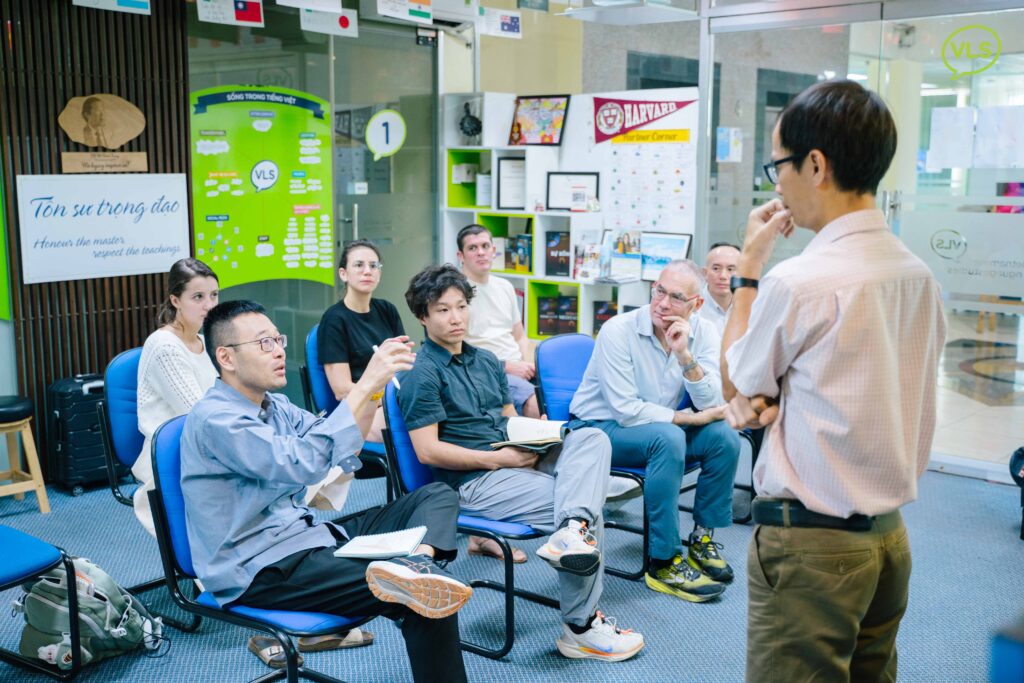
If you ask any foreigner who’s tried to learn Vietnamese, they’ll tell you: pronouns are a cultural puzzle. There’s no single “I” or “you.” Instead, Vietnamese offers a rich tapestry of pronouns that change depending on who you’re speaking to, how you feel about them, and even where you are. But what seems complicated at first is actually a window into Vietnamese society – one built on respect, humility, and connection.
When a young woman calls her colleague “anh” (older brother), she’s not talking about family – she’s placing herself within a respectful, familiar framework. When she calls her teacher “cô” or “thầy,” she acknowledges not just authority, but the moral bond between teacher and student – one that carries deep social gratitude.
These pronouns aren’t merely linguistic choices; they shape how relationships work. You can’t speak Vietnamese without constantly thinking about the other person – their age, position and closeness. It’s a language that encourages empathy. Interestingly, this flexibility also creates intimacy. A couple might switch from “anh–em” to “tôi-cô” or “tôi-anh” playfully during an argument, signaling distance. Later, returning to “anh–em” is a quiet reconciliation. Words become emotional choreography.
For learners, this can feel daunting – but it’s also one of the most beautiful parts of Vietnamese. Once you grasp the logic behind these pronouns, you begin to see how Vietnamese people navigate relationships with incredible nuance and care.
In this way, the Vietnamese language doesn’t simply describe relationships – it builds them.
The Power of Context and Indirectness
Vietnamese language is candlelight: soft, layered, and suggestive. What’s left unsaid is often more meaningful than what’s spoken.
In Vietnamese culture, direct confrontation can feel uncomfortable or even impolite. Harmony matters more than blunt honesty, and language reflects that. So instead of saying “no,” a Vietnamese speaker might say “để xem đã” (“Let’s see first”), or “cũng hơi khó” (“That might be a bit difficult”). These phrases don’t hide the truth — they protect relationships.
Context, tone, and facial expression carry enormous weight. A simple “được” can mean “sure,” “not really,” or “fine, if you insist,” depending on how it’s said. Learners soon discover that literal translation isn’t enough — understanding Vietnamese means reading emotional context as fluently as vocabulary.
This indirectness isn’t vagueness; it’s social intelligence. It’s the language of people who value peace over pride, cooperation over confrontation.
Even in business or diplomacy, this style persists. A senior manager might respond to a proposal with “Anh sẽ cân nhắc thêm” (“I’ll think it over”) — which could mean genuine consideration, or a polite decline. The key lies in timing, tone, and relationship — a kind of communication dance that rewards attentiveness more than assertiveness.
When you begin Vietnamese learning, you start to realize that understanding words is only half the task. The other half is learning how to listen differently — to pick up subtle pauses, smiles, or shifts in tone that reveal what’s really being said.
And when you finally get it — when you understand a “no” that sounds like “maybe” — you realize you’re not just learning a language. You’re learning a whole cultural rhythm.
Tones That Speak Beyond Words
For many learners, tones are the first great challenge of Vietnamese — six distinct rises and falls of pitch that can completely change meaning. A single syllable like “ma” can mean ghost (ma), mother (má), or horse (mã) depending on how it’s pronounced.
But to Vietnamese speakers, tones go far beyond dictionary definitions. They are the soul of the language — a reflection of how Vietnamese people express not only what they mean, but how they feel.
Each tone carries a shade of emotion. The gentle rising tone can sound friendly or questioning; the sharp falling tone can signal firmness or seriousness. This musical precision makes Vietnamese speech feel alive, like a melody shaped by feeling and respect.
In conversation, a misplaced tone doesn’t just change a word — it changes the relationship. A sentence said with the wrong tone can turn politeness into irritation, or warmth into distance. That’s why mastering tones isn’t only about pronunciation; it’s about tuning into emotion, empathy, and cultural rhythm.
To speak Vietnamese beautifully is to find harmony between sound and feeling — to “nghe” (listen) before you “nói” (speak). Because in the end, Vietnamese tones don’t just carry meaning — they carry the heart.
Expressions Rooted in Shared Experience
Every culture encodes its wisdom in sayings, but Vietnamese proverbs and idioms — thành ngữ and tục ngữ — are a cultural archive in miniature. They distill everyday experiences into poetic truths, passed down through generations.
Many of these expressions reveal the soul of a community shaped by nature, labor, and family. Consider:
- “Nước chảy đá mòn” — “Flowing water wears away stone.” Patience triumphs over force.
- “Lá lành đùm lá rách” — “The good leaf wraps the torn one.” Those who have should protect those in need.
- “Ăn quả nhớ kẻ trồng cây” — “When eating fruit, remember the one who planted the tree.” Rooted in Vietnam’s agrarian culture, this proverb reminds people to show gratitude and acknowledge the efforts of those who came before — a value that remains deeply relevant today.
Each phrase is more than a moral lesson — it’s a reflection of how Vietnamese people perceive time, effort, and relationships. Even modern speakers use these expressions effortlessly, linking daily conversations to ancestral wisdom.
When you learn Vietnamese, you begin to hear how the past lives inside the present. These idioms appear in songs, in jokes, in political speeches. They’re not ornamental — they’re living culture, shaping how people think and act. Many of these expressions echo themes found in Vietnam’s intangible cultural heritage, from folk songs to proverbs that preserve collective wisdom.
To understand Vietnamese proverbs is to understand what moves the Vietnamese heart: perseverance, gratitude, and a deep respect for life’s interconnectedness.
Humor, Politeness, and the Art of Communication
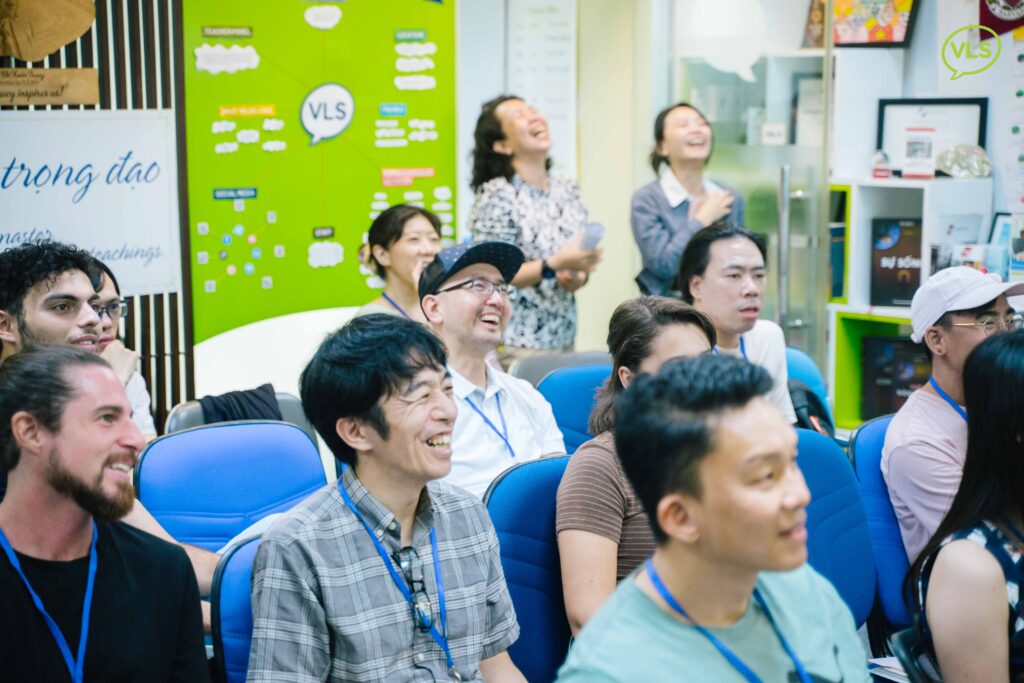
Humor in Vietnam doesn’t shout — it smiles. It thrives on playfulness, subtle wordplay, and gentle irony. It’s humor with humility, where laughter becomes a bridge rather than a weapon.
A Vietnamese joke rarely targets others; it pokes fun at oneself or at life’s absurdities. People might tease themselves for being “quê” (rural – old-fashioned) or laugh about everyday misfortunes — turning embarrassment into shared humanity. This warmth in humor reflects a society that values emotional closeness and resilience.
Politeness, too, takes a unique shape in the Vietnamese language. It’s not rigid or formulaic like in some cultures — it’s fluid, situational, and heartfelt. Saying “dạ” at the end of a sentence adds softness; using “ạ” conveys respect even when speaking to strangers.
What fascinates many learners is how naturally these gestures of politeness blend with humor and emotion. A single “dạ, không đâu ạ!” can mean “no, thank you,” or “no, really, it’s fine,” or even “no, but I appreciate it” — depending on tone and smile.
To speak Vietnamese politely isn’t to memorize etiquette; it’s to internalize empathy. And when you finally grasp that rhythm — when your “vâng” lands at just the right softness — you realize you’re not just speaking correctly, you’re belonging.
The Language of Connection
Every language connects people, but the Vietnamese language connects through feeling. It invites you to see relationships not as categories but as living, breathing exchanges.
Vietnamese people often say that when a foreigner speaks even a few words — “Chào em”, “Cảm ơn”, “Ngon quá!” — it sparks joy. It’s not about perfection; it’s about sincerity. You’re not just communicating — you’re participating.
In Vietnam, language opens doors both literal and emotional. A warm “chào anh” can turn a stranger into a friend; a respectful “dạ vâng” can smooth a tense moment. Speaking Vietnamese shows that you see the people around you — not as background characters, but as part of your shared daily story.
And that’s the true hidden code: language here is not a tool but a bridge. When you speak Vietnamese, even imperfectly, you’re saying, “I want to understand your world.” And that act of reaching across difference — that simple sentence said with heart — often speaks louder than words themselves.
Learning Vietnamese Is Learning Vietnam
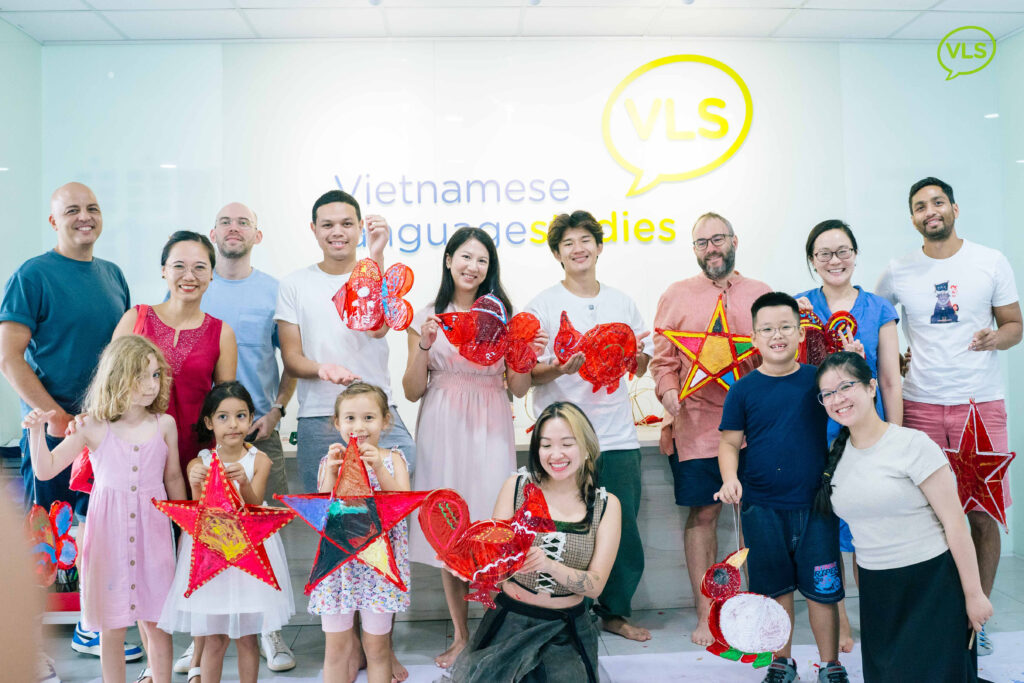
To learn Vietnamese is to explore a living culture — one that whispers its values through tone, humor, and subtlety. You start with words, but you end up understanding people.
You begin to notice how elders use stories to teach kindness, how colleagues soften disagreement with laughter, how friends use food metaphors to show care. Each discovery feels like uncovering another layer of Vietnam — one hidden not in museums or textbooks, but in everyday speech.
The Vietnamese language doesn’t just tell stories; it is a story — one written by millions of voices across generations, each adding their own warmth and rhythm. And by learning it, you become part of that story, too.
Where Language Meets Life: Learn with VLS
At Vietnamese Language Studies (VLS), we believe language learning should be an immersion into real Vietnamese life. Our teaching philosophy goes beyond grammar and vocabulary — we help learners understand how Vietnamese people think, feel, and connect.
Through cultural workshops, interactive classes, and authentic community experiences, VLS guides you to uncover the hidden cultural codes behind the words. You won’t just memorize sentences — you’ll learn how to listen to tone, how to choose the right pronoun instinctively, and how to express yourself naturally in any setting.
Whether you’re a professional working in Vietnam, an expat seeking deeper connection, or a traveler captivated by Vietnamese culture, VLS helps you do more than study the language — we help you live it.
???? Join VLS and experience Vietnamese learning through culture, connection, and community.


Passing the Certified Technical Architect certification requires deep technical expertise and structured preparation. Practicing with CTA Exam Questions helps you understand real-world scenarios and architecture challenges. ACE4Sure offers expertly designed and verified CTA questions that simulate the actual exam environment, improving your analytical and problem-solving skills. Each question is crafted by professionals to align with the latest exam syllabus, ensuring you gain the knowledge and confidence needed to succeed in your Salesforce Certified Technical Architect certification journey.
Just checked out pg13game. Seems like a decent place to chill and play some games. Nothing too crazy, just good ol’ PG-13 fun. Might hop on later!
Okay, so I was having major trouble logging into Sikkimgame! Found the official sikkimgameloginlink and it worked like a charm. Sharing it here in case anyone else is struggling!